
Why supply planning needs to go beyond forecasting and help businesses make better purchasing decisions.
I recently worked with a distributor that had an interesting challenge. They weren’t just looking for better demand forecasting. They wanted to make smarter purchasing decisions and understand how those decisions would impact their inventory over time.
And the more we talked, the more it became clear that their challenge went beyond simply knowing how much inventory to order. They needed answers to questions like:
- How much should we purchase?
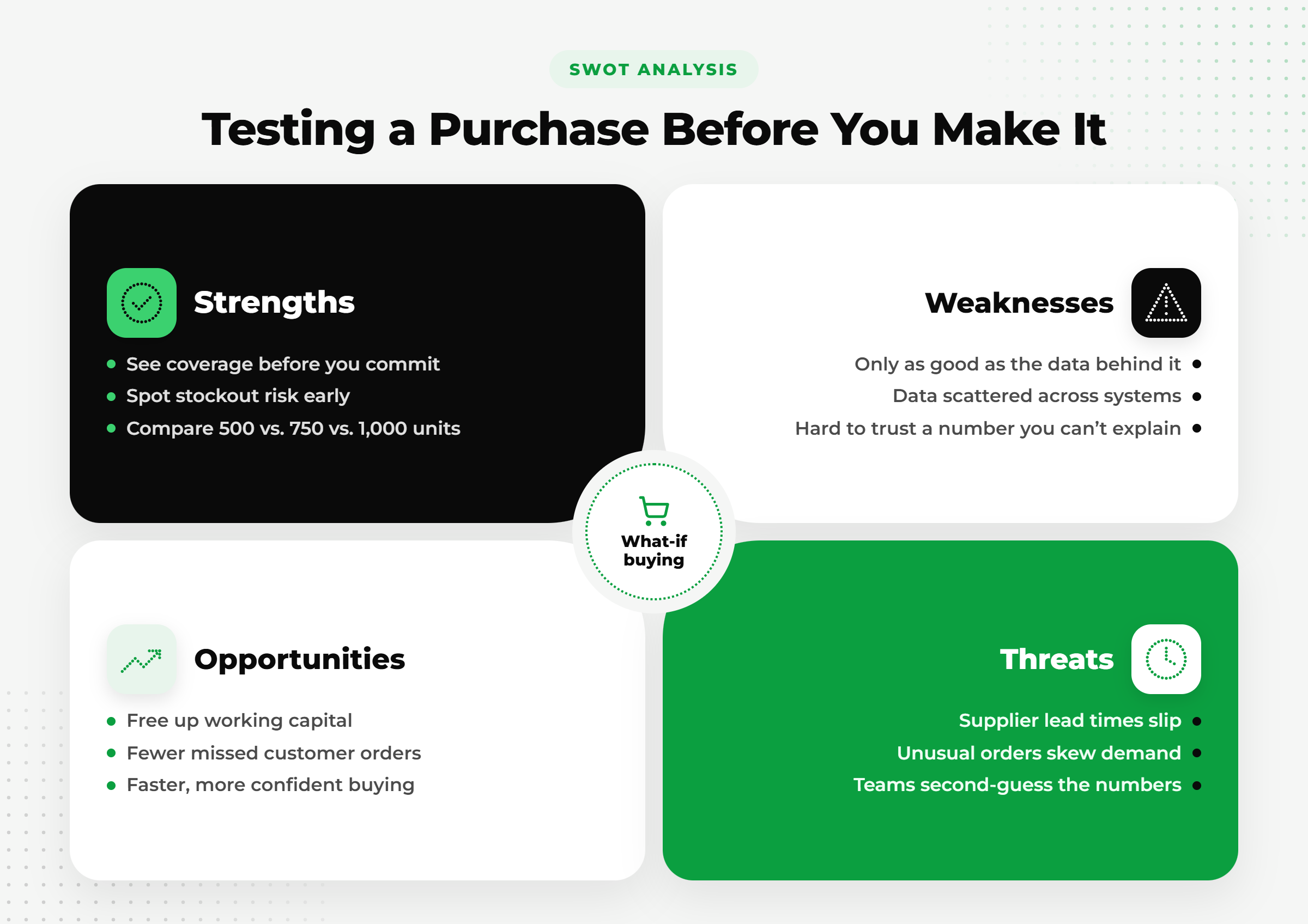
- What happens if we buy 500 units instead of 1,000?
- How many days of inventory coverage will that give us?
- When are we at risk of running out of stock?
- What happens if a supplier takes longer than expected to deliver?
These are the types of questions purchasing teams deal with every day.
A Forecast Is Only Part of the Supply Planning Answer
Most manufacturers and distributors understand the importance of demand forecasting. They look at historical sales, purchasing trends, seasonality, and current inventory to estimate what customers might need in the future. But knowing what demand might look like doesn’t necessarily tell you what purchasing decision to make today.
Let’s say your forecast predicts you’ll sell 1,000 units over the next 60 days.
Sounds simple enough.
But what if you already have 300 units available, another 200 arriving next week, and your supplier has a 30-day lead time? Should you order another 500 units? Maybe 800? Or should you wait? And how does each decision change your inventory position over the next several weeks?
That’s where supply planning and purchasing simulations become valuable.
What If You Could Test a Purchasing Decision Before Making It?
One of the biggest things this distributor wanted was the ability to evaluate different buying scenarios. Instead of simply receiving a recommended purchase quantity, they wanted to understand the impact of that recommendation.
For example, imagine evaluating three purchasing options:
| Scenario | Purchase Quantity | Question to Answer |
| Option A | 500 units | Will we have enough inventory to avoid a stockout? |
| Option B | 750 units | How much additional coverage does this provide? |
| Option C | 1,000 units | Are we buying more inventory than we actually need? |
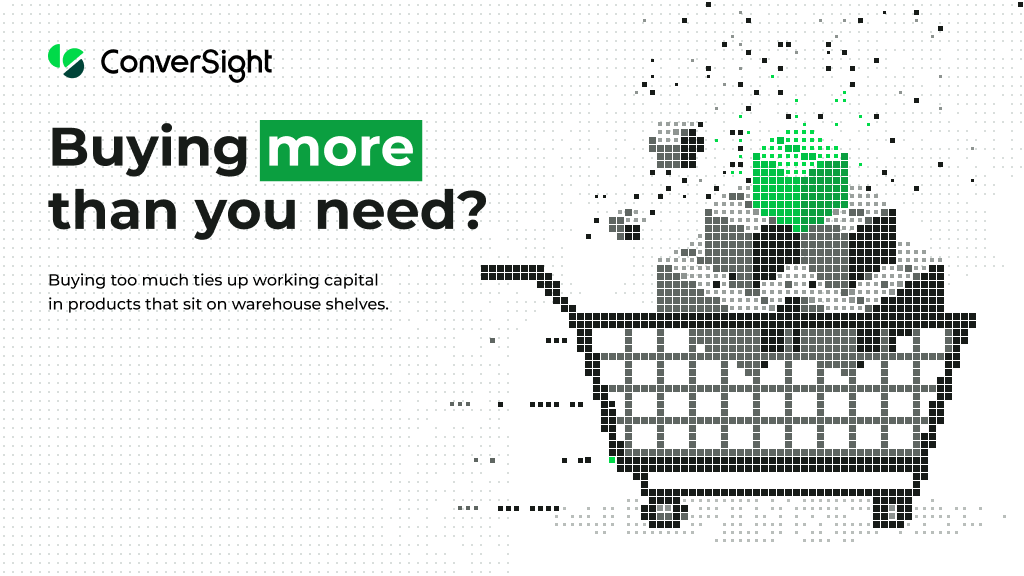
These quantities are illustrative, not actual customer results. Each scenario has different implications for cash flow, inventory coverage, and potential stockouts. Buying too little could mean running out of inventory and missing customer demand. Buying too much could mean tying up working capital in products that sit on warehouse shelves.
The goal isn’t necessarily to buy the most or the least. It’s to understand the trade-offs and make the best purchasing decision based on the information available.
Inventory Coverage Is More Than a Number
Another important part of the conversation was understanding inventory coverage. It’s one thing to know you have 1,000 units sitting in your warehouse. It’s another to understand how long those units are expected to last. Depending on demand, those 1,000 units could represent 20 days of coverage or 90 days. Now factor in supplier lead times, existing purchase orders, changing demand, and safety stock. Suddenly, determining what to buy becomes much more complicated.
And here’s something I’ve seen throughout my career working with manufacturers and distributors:
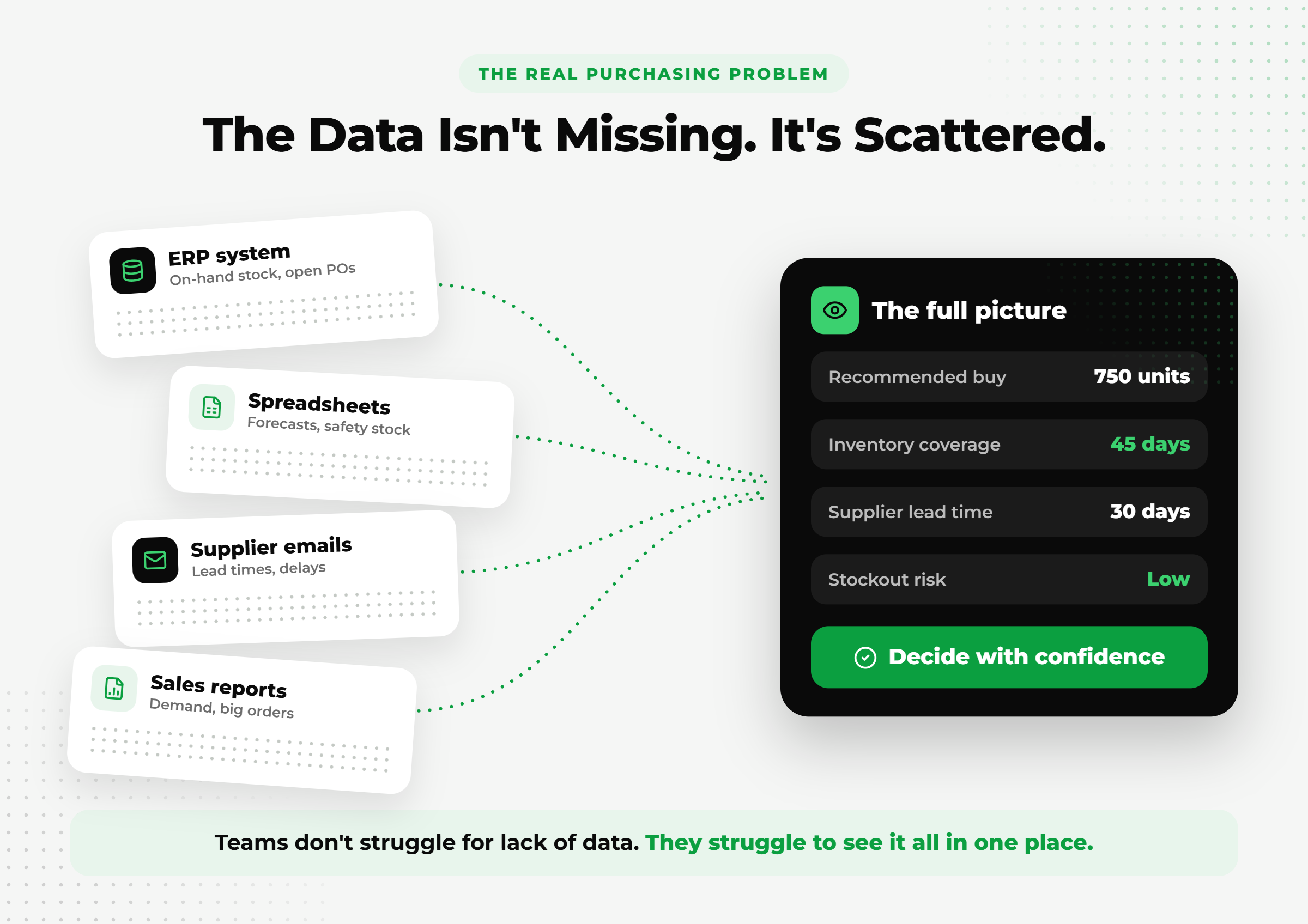
Purchasing teams don’t always struggle because they lack data. They struggle because the information needed to make decisions is scattered across different systems, reports, and spreadsheets. That makes it difficult to evaluate the full picture before committing to a purchase.
The Importance of Trusting the Recommendation
Something else that stood out during this customer engagement was the importance of understanding how purchasing recommendations are calculated. A system might recommend purchasing 800 units.
But a purchasing manager still needs to understand why.
Was the recommendation influenced by an unusual customer order? Did supplier lead times change? How much safety stock was included?
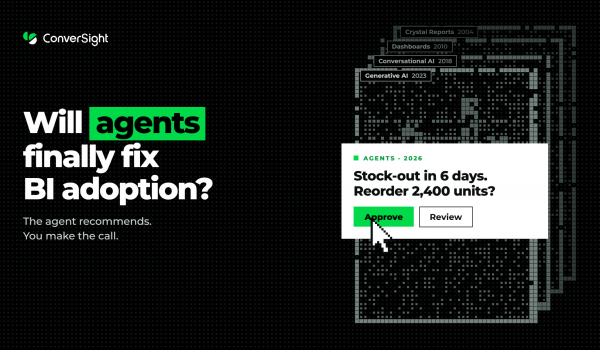
If those questions can’t be answered, teams may end up manually checking recommendations before trusting them. And that defeats much of the purpose of investing in better planning technology. This is where I believe AI and advanced analytics can provide real value, not just by generating a number, but by helping people understand the factors behind it and evaluate alternative decisions.
Supply Planning for Better Decisions, Not Just Better Forecasts
What I took away from this experience is that businesses need more than a forecast telling them what demand might look like. They need a way to connect forecasting with actual purchasing decisions. They need to understand what happens when they order more, order less, delay a purchase, or experience a change in supplier lead time.
They need visibility into future stockout risks and inventory coverage before making a commitment. And most importantly, they need to trust the information behind those recommendations.
After nearly 16 years working with manufacturers and distributors, one thing continues to stand out to me: The goal of supply planning isn’t simply to tell businesses how much to buy. It’s to help them understand why they’re buying it and what that decision means for their business.
Want to see what your inventory looks like before you commit to a purchase? Book a demo.