

UniVerse Knowledge Layer

Define your business once. Power every decision from it.

One place to define how your business measures performance, so every report, dashboard, and decision starts with the same truth.

The operator problem

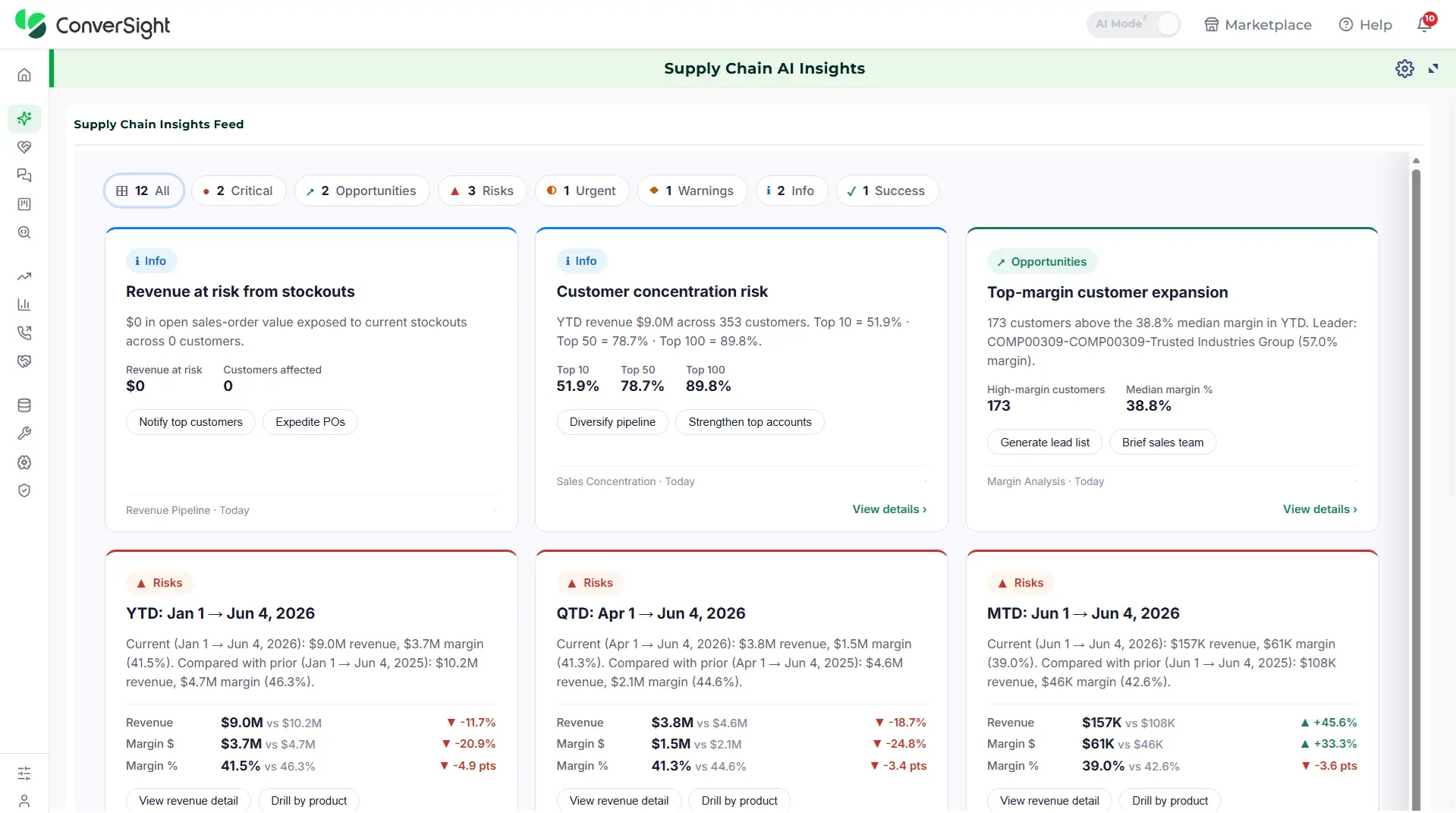
Three people. Three numbers. One metric. Finance, Operations, and Commercial are all pulling from different systems — and none of them are wrong. They’re just reading three different definitions of the same word. The meeting becomes an argument about data instead of a decision about the business. The UniVerse Knowledge Layer ends that argument. 

What it is

What is the Knowledge Layer?

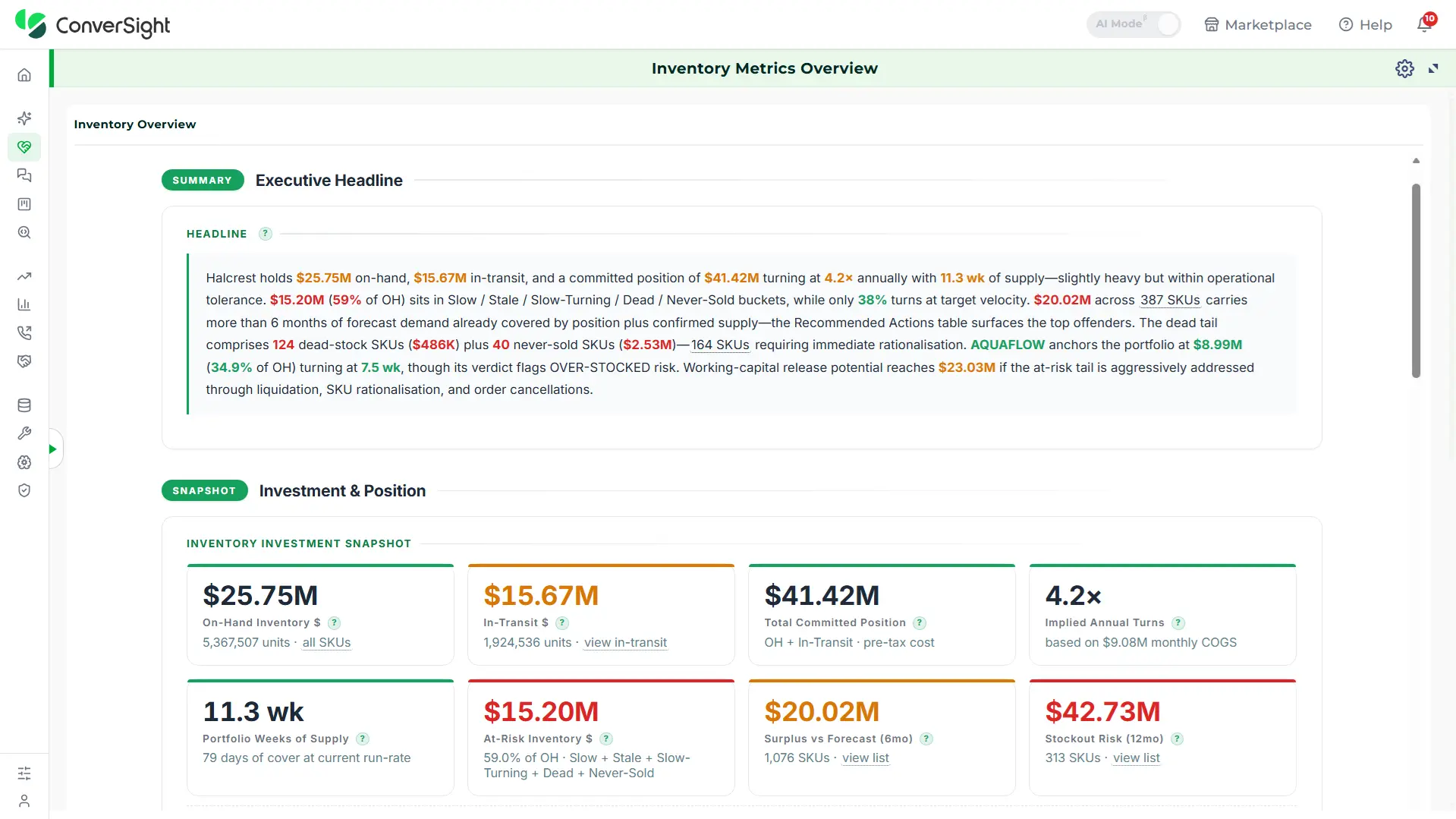
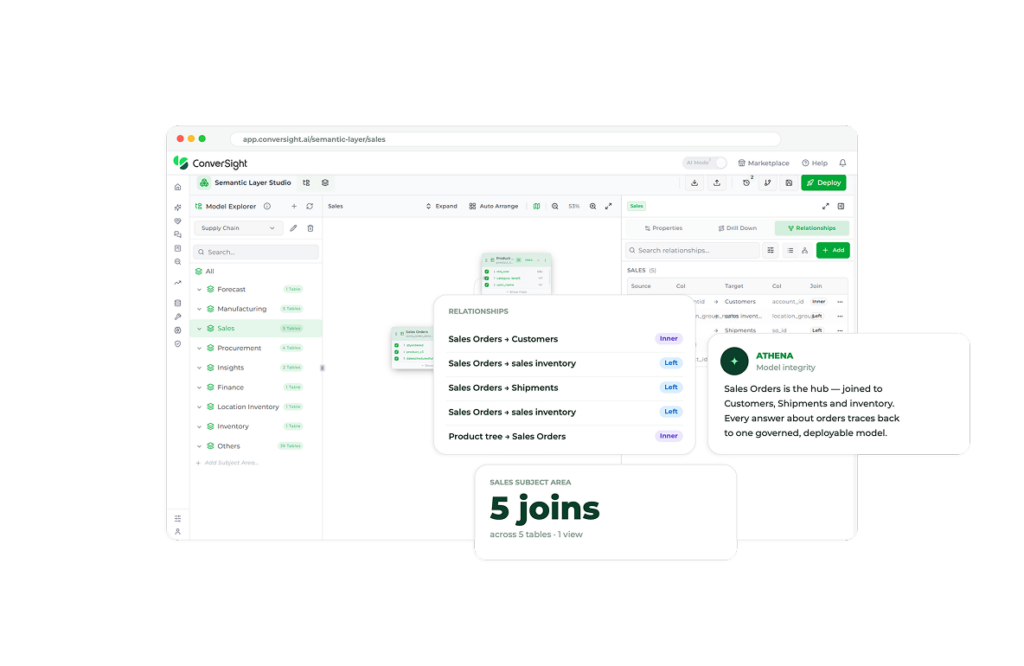
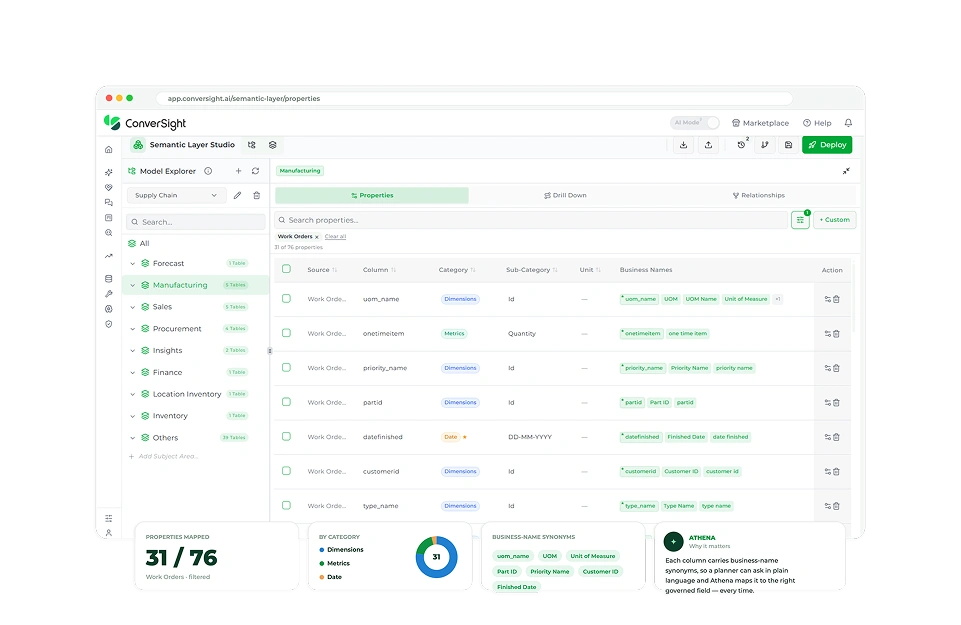
The UniVerse Knowledge Layer is the semantic model that sits between your operational data and every downstream consumer — Athena, the workflow engine, your BI tools, your planners, your executives. It defines what a SKU is, how lead time is calculated, which customers roll up to which segment, and how OTIF is measured. Once. Centrally. With version control and an audit trail. 

One Source of Truth

One definition, every consumer

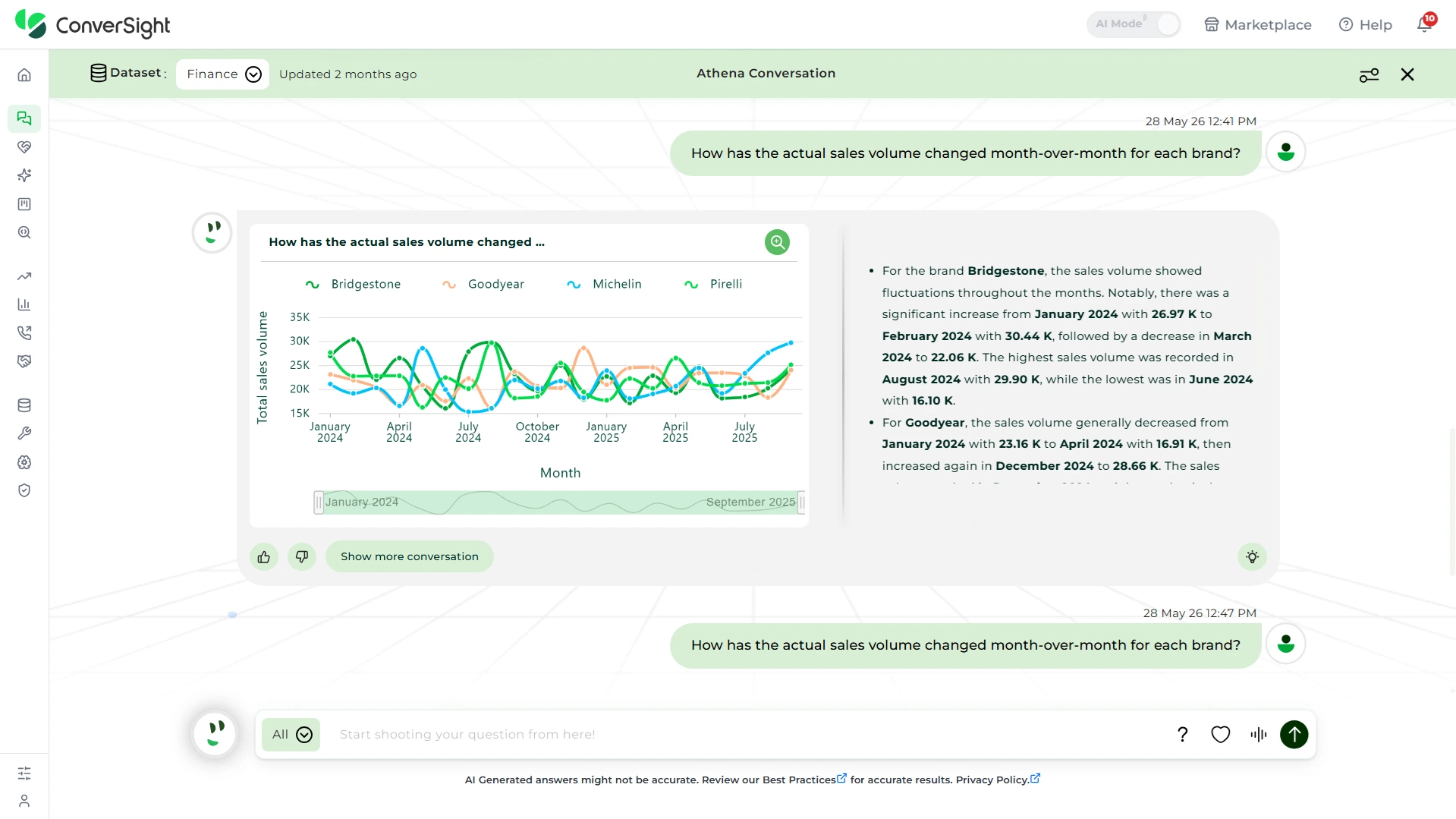
Define a metric once and every tool uses the same logic automatically—from Athena to dashboards to executive reports. When definitions change, they update everywhere with a complete audit trail.
Built on Supply Chain

Built on supply chain primitives

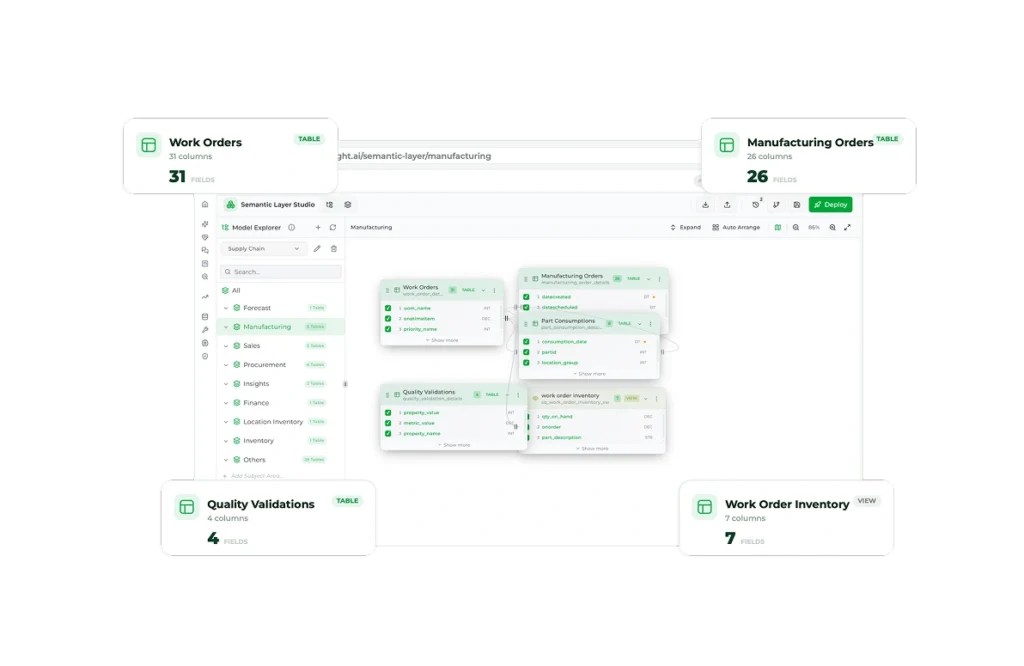
Start with prebuilt supply chain entities like products, locations, customers, suppliers, and lead times. Extend them for your business without rebuilding your data model.
Trusted Metrics

Metrics that mean the same thing, everywhere

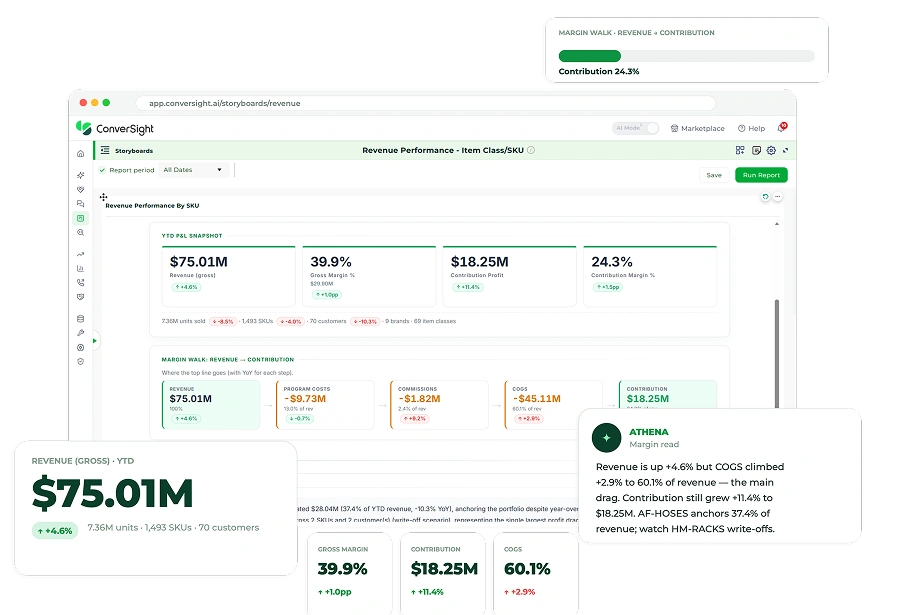
Every metric, hierarchy, and relationship is defined and managed centrally. Finance, planning, and operations always get the same answer to the same question.
Governed Centrally

Governed at the layer, not at each tool

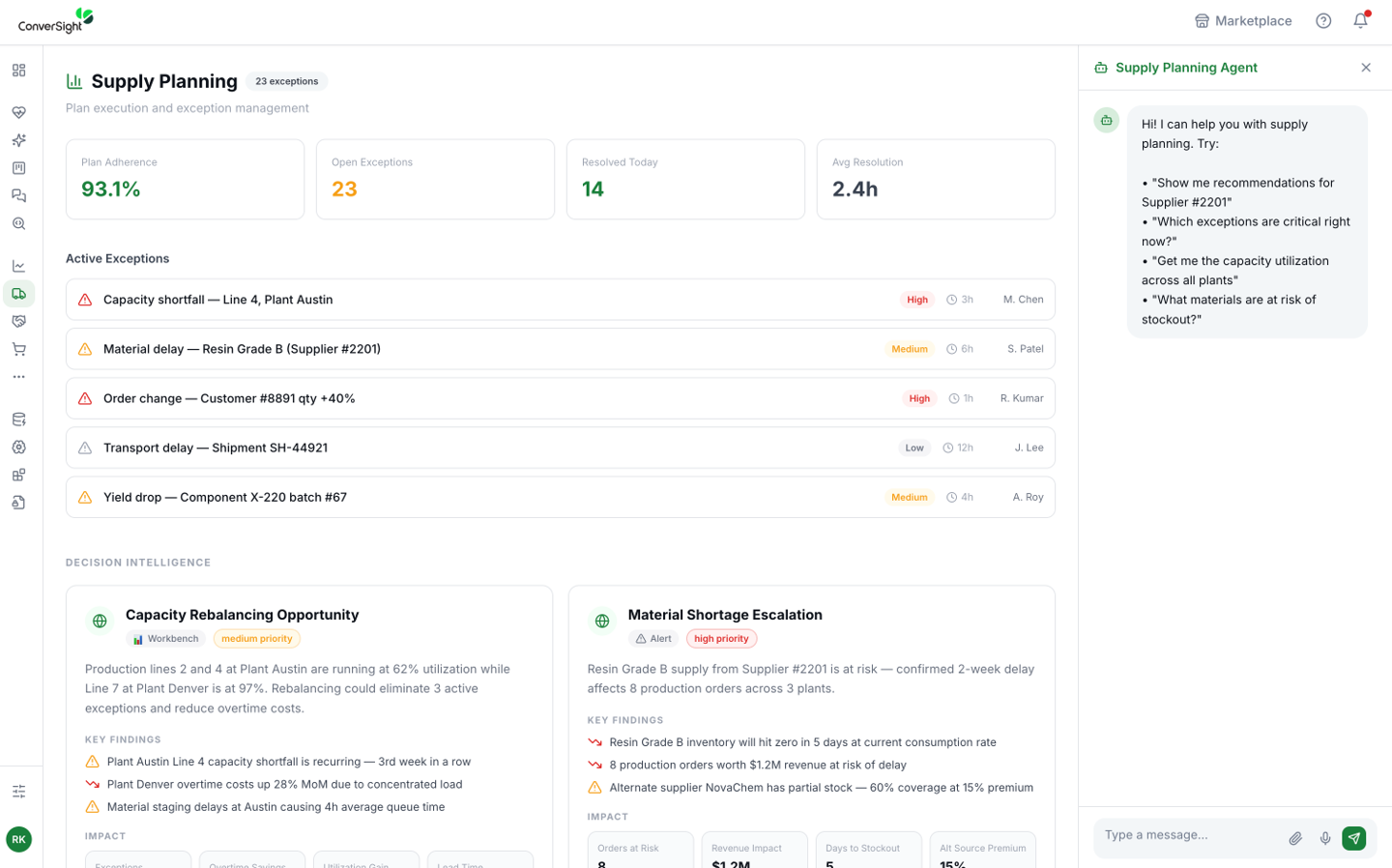
Control who can see data, change definitions, or access sensitive information from one place. Governance is enforced across every application automatically. 

Built to fit your stack

How it works

Step 1

Model Layer

Supply chain entities, metrics, and relationships are defined once — SKUs, lanes, lead times, hierarchies, and KPIs. 

Step 2

Semantic Engine

Translates business questions into governed queries against your operational data — no SQL required. 

Step 3

Governance Layer

Enforces access control, lineage tracking, and version history at the semantic layer — not at each consuming tool. 

Step 4

Publish

Publishes the semantic model into the platform that team uses — Athena, BI tools, Excel, Python notebooks — automatically. 

BenchmarKS AND Accuracy

Proven at Scale

From mid-market manufacturers to global enterprises, supply chain teams use ConverSight to cut planning cycles, reduce stockouts, and free working capital — often within the first quarter of deployment.

forecast accuracy lift
0 %
forecast accuracy lift
0 %
planner productivity
0 x
reduction in expedited shipments
0 %
Trusted by Supply Chain Leaders
AcumaticaAcumen Information SystemsAlliance Solutions GroupAlta Vista TechnologyBottom Line AccountingConcentrusDB Computer SolutionsDSD Business SystemsEquation TechnologiesETHOSystemsEureka SolutionsFishbowli-Tech SupportKatanaMicrosoft DynamicsNet at WorkNexTecOracle NetSuitePine Services GroupPractical Software SolutionsRev Up ManufacturingRootStockSageSalora ERPStewart TechnologyStrategic Information GroupSWK TechnologiesTech Next LLCThe Vested GroupThird Wave Business SystemsWestern Computer

Trust Signals

SOC 2 Type II, ISO 27001, and GDPR-compliant. Customer data is isolated by tenant, never used to train shared models. Every Athena decision is logged with full lineage for audit. See the Trust & Security page for the complete posture.

RESOURCES

Learn More

See ConverSight in action.

Sed do eiusmod tempor incididunt ut labore et dolore magna aliqua.