Beginner’s Guide To Implementing AI: The Do’s and Don’ts of Cloud Adoption
The first edition in our series on implementing AI into your business focuses on adopting cloud storage and computing technologies, and the potential the cloud has for revolutionizing the way you do business. Some of the benefits of cloud adoption include reduced costs, increased flexibility and advanced analytics and insights, but where do you start?
Growth of the Cloud
Becoming familiar with the cloud is no easy task. Cloud software and computing have revolutionized the way businesses interact and galvanize their data, especially for businesses with massive amounts of data from IoT (Internet of Things) devices or various different data lakes and storage mechanisms. And the trend is not stopping there: according to recent research, the global cloud computing market is expected to reach a value of $750.1 million by 2027, with a compounded annual growth rate of 30% from 2021-2027.
How It Affects You
It takes time and intentional effort to bring out the desired results for your business, and employees may not be well-versed or actually willing to use cloud computing and storage. It’s important to have discussions with members of your team who are “cloud-averse,” and explain the benefits of Cloud adoption in simple terms. Getting your team on board is crucial for attacking step two in the process, identifying ROI. But you don’t want to overspend on cloud software, either.
4 Need-to-Knows
Your aim should be an intentional move to the cloud with your whole team on board. Once you’ve achieved internal buy-in from key decision makers and stakeholders, choosing a cloud software can still be tricky. The goal is to not overspend on any one software and diversify if needed. A couple of helpful tips when choosing a cloud software:
Understand your business’ requirements for cloud storage and computing
Pick a software(s) that meets all of your needs, but do not overspend
Adopt your existing storage and computing needs to be in line with your new cloud software
Start small! Do not aim to solve all of your goals right away
It takes time to implement a cloud strategy into your business, but businesses everywhere are discovering the benefits of cloud software and what it can do for their bottom line.
Planning on making the move to cloud? Request a demo today to see just how easy it can be.
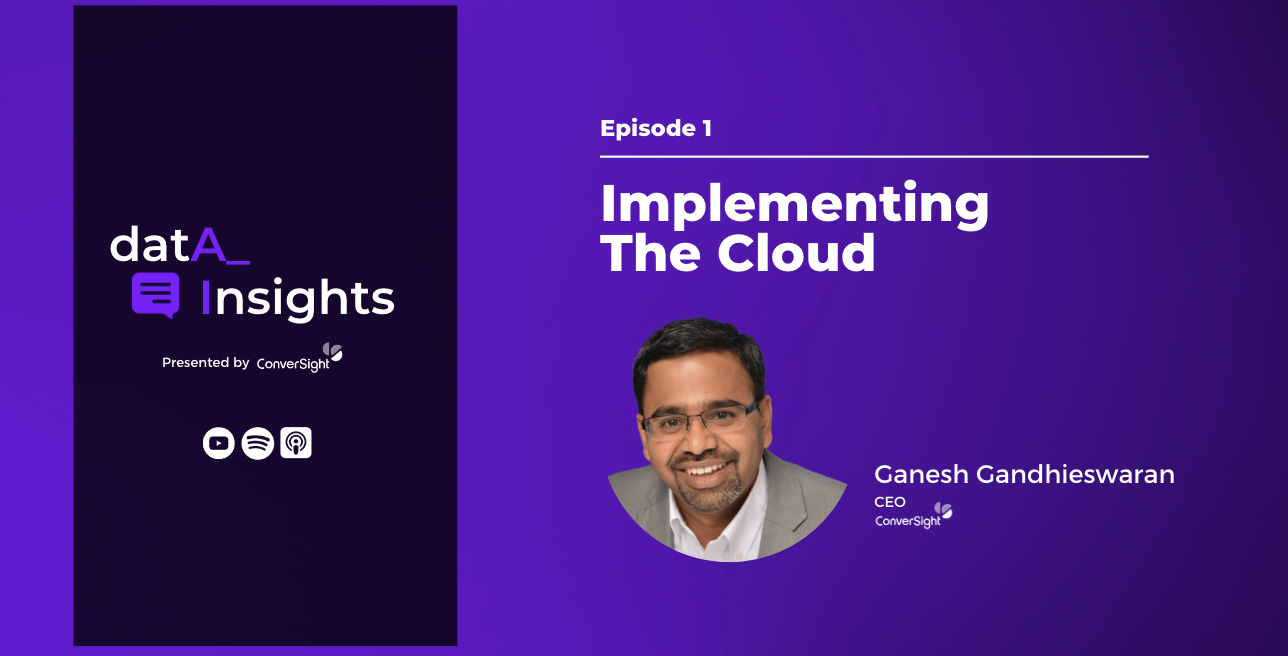
Check out our podcast series, “Behind the Data: An AI Podcast” episode #1, “Adopting the Cloud” to get more info on this topic:
We use cookies to ensure that we give you the best experience on our website. If you continue to use this site we will assume that you are happy with it.