
Many data analytics softwares offer robust features for data visualization and proactive insights, but many now offer additional features such as AI and GPT integrations to tell the full story that a business’ data is telling. This article will explore the differences between ConverSight and Qlik, how each functions to access and parse data, and most importantly their AI and GPT capabilities. These functions are crucial for decision makers to consider when adding new AI to their tech stack.
Traditional dashboards and insights rely on human effort to review and reveal key data insights. AI and automation allows business users to make data-driven decisions while relying on AI, and democratizing data for the entire organization ultimately improving decision making across the business.
With the addition of GPT integrations, data storytelling and augmented analytics will continue to be the most in-depth way for users to access and get insight into their data and if a business isn’t currently leveraging a tool that leverages these advanced technologies, they will get left behind. Let’s take a look at ConverSight’s and Qlik’s capabilities:
Founded in 1993, Qlik is a business analytics platform that allows users to connect disparate data systems and get data insights. Qlik is an all-in-one platform that can store and parse data for users, while also providing users with various data visualization tools. Qlik enables businesses to:
While Qlik provides a robust set of data visualization capabilities, users often find that Qlik has inflexible data extraction methods, as well as complicated data visualization tools, especially when working with large data sets.
Recognizing the challenges many businesses were facing with data ingestion, analytics and decision making, ConverSight was built to humanize the interaction users have with data through the power of augmented analytics, data storytelling and generative AI. With the help of its AI assistant, Athena, ConverSight users gain access to endless insights in a manageable, digestible interface that prioritizes the user.
Generative AI: Athena has the ability to create data stories, producing timelines and narratives that provide the full picture on the story the data is telling. Natural language querying provides the most in-depth way for business users to access and get insights into their data, all in a simple 1:1 interaction with AI.
Easy Data Connection: ConverSight has over 130 integrations, making it easier than ever for businesses to connect their disparate data systems and get insights.
End-to-end visibility: With control towers, AI platforms create a 360-degree view of data, allowing businesses to view their data from every angle. Control towers lead businesses toward transparency and better coordination, which allows businesses to stay on top of demand which leads to lower costs and higher efficiency.
AI Workbench: Build and scale your own unique models across an open source platform. Utilize Jupyter notebook and AI/ML frameworks to build models that work for your company specifically. Publish your framework in the marketplace to increase reusability across your entire organization.
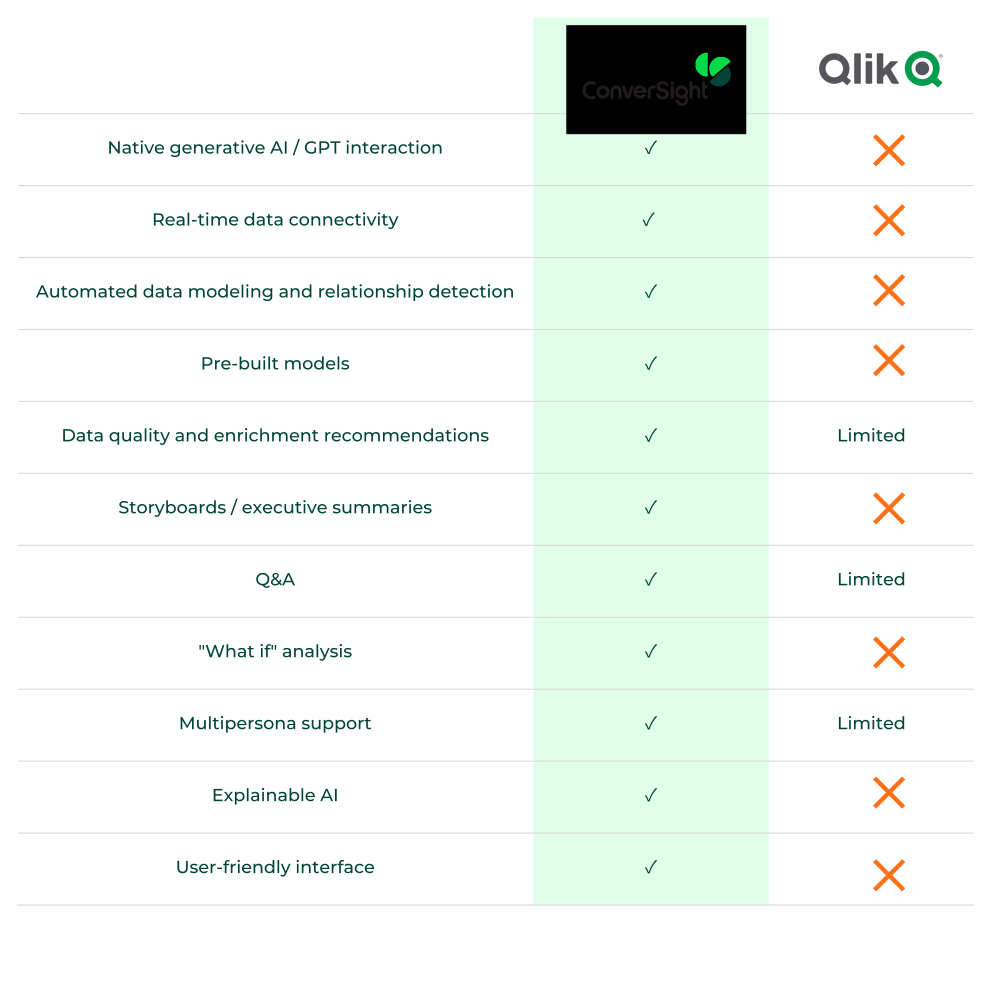
While Qlik provides basic data visualization and insights capabilities for users, ConverSight provides a much more robust and simultaneously easier to use solution that integrates new GPT technologies for enhanced data querying. Engage AI in a 1:1 to ask questions about your data, and get the full picture around the answer, the how, why and what to do next. Democratize data for your entire organization, and keep data safe on a user and row level for data-driven decision making.
Request a demo today to see the difference for yourself.

Stay updated on the latest in tech