How AI Assistants Are Reshaping Workflows, Driving Efficiency, and Delivering Business Impact
The Shift Has Already Started
Today, imagine starting your day with your AI assistant sending you a personalized message: “Sales in Region West are 7% below target. Would you like a detailed breakdown?” No reports to pull, no waiting on analysts, no dashboard hopping.
This is not some futuristic workplace scenario. It’s the new reality of AI assistants integrated into daily workflows. As a result, businesses are no longer waiting to adopt digital teammates; they already have. The emergence of AI assistants is reshaping the way work gets done—moving from reactive to proactive, manual to automated, and static to real-time.
Moreover, the AI assistant is often the first, most visible, and impactful addition to an organization’s digital workforce. It doesn’t aim to replace employees but to empower them by removing repetitive work, making data more accessible, and enabling faster decision-making.
What an AI Assistant Really Is (And Isn’t)
When people hear the term “AI assistant,” the first image that often comes to mind is a basic chatbot—a tool that responds to scripted queries with limited flexibility. However, that perception dramatically underestimates what modern enterprise-grade AI assistants are truly capable of.
AI assistants have evolved far beyond preset menus and static responses. Today, they function as intelligent digital collaborators, deeply integrated into your organization’s core systems and workflows. As a result, these assistants don’t just respond—they understand, learn, act, and enhance operations over time.
Let’s break down what makes this possible:
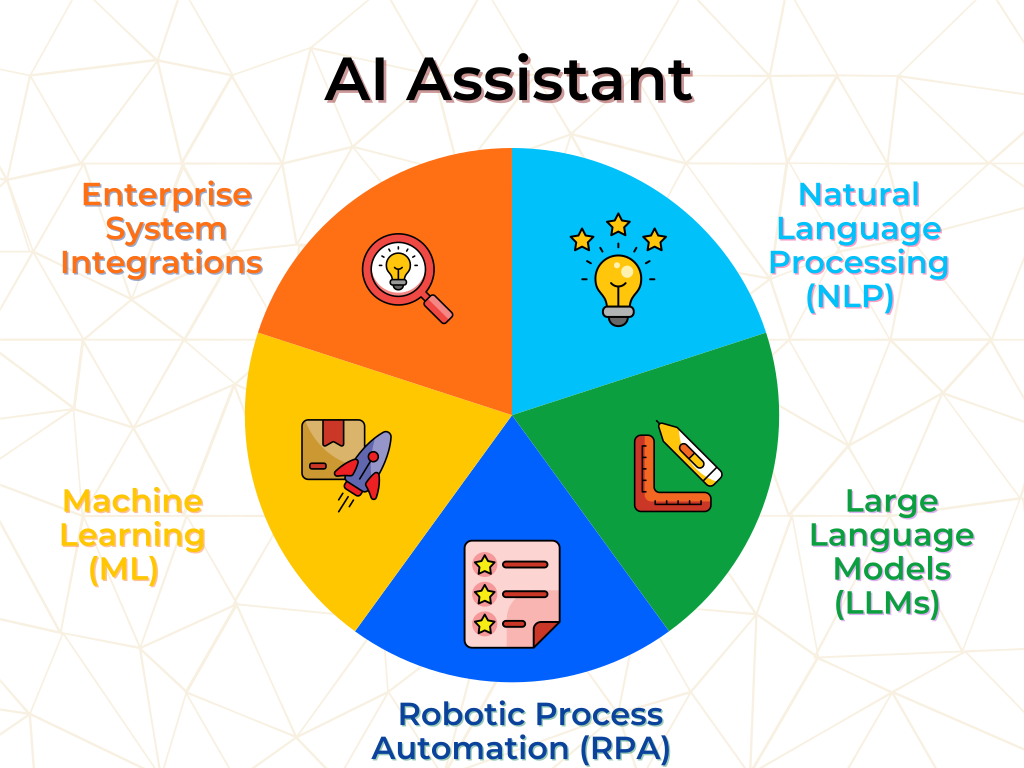
Natural Language Processing (NLP)
NLP is the foundational layer that allows the AI assistant to understand human language—whether it’s typed in a chat window or spoken into a voice-enabled device. Specifically, it deciphers intent, interprets meaning, and understands variations in phrasing, grammar, and tone. As a result, this enables users to interact with the assistant naturally—without needing to learn commands or click through complex menus.
Large Language Models (LLMs)
While NLP helps with understanding, LLMs are what make the assistant sound human. In fact, these models (like GPT-based engines) use advanced pattern recognition and vast language knowledge to generate responses that are not only accurate but conversational. They enable the AI to maintain context across multi-turn conversations, respond appropriately to follow-up questions, and deliver nuanced, context-aware insights.
Robotic Process Automation (RPA)
Behind the scenes, AI assistants can trigger actions just like a human would—only faster and more reliably. RPA enables the assistant to execute routine tasks such as scheduling meetings, sending alerts, generating reports, or updating records in ERP or CRM systems. Instead of just giving an answer, the AI can initiate action and complete tasks, reducing manual effort for users.
Machine Learning (ML)
The intelligence of an AI assistant improves with use. ML allows it to learn from user behavior, historical data, and interaction patterns. Over time, it can personalize responses, suggest relevant information before being asked, and adapt to preferred workflows. For instance, it might learn that a sales manager always checks revenue by region on Monday mornings and proactively deliver that insight each week.
Enterprise System Integrations
Perhaps the most critical factor in making AI assistants useful for businesses is their ability to connect with enterprise tools like ERP (e.g., SAP, NetSuite), CRM (e.g., Salesforce, HubSpot), business intelligence platforms (e.g., Power BI, Tableau), and even warehouse management systems. This integration is what allows the assistant to act on real-time data, query live systems, and offer insight or actions that are grounded in business context.
Understanding the Different Roles of AI Assistants
AI Assistants are no longer limited to answering basic queries or performing small tasks. In modern enterprises, they have evolved into purpose-built digital agents, each tailored to solve specific business challenges—be it automating backend tasks, enhancing customer service, or delivering real-time strategic insights.
These assistants play a variety of roles depending on their focus area, the systems they interact with, and the value they deliver. Recognizing these roles helps organizations deploy the right type of assistant where it matters most—whether it’s driving operational efficiency, supporting decision-making, or enabling seamless interactions across departments.
AI Service Assistant
AI Service Assistants are the front line of user engagement. They operate in chat windows, mobile apps, and messaging platforms like Teams or Slack. These assistants provide instant responses to questions, automate ticket creation, help with appointment scheduling, and streamline common support tasks. Handles real-time, conversational interactions with users—whether customers, employees, or partners.
Key Capabilities:
- Answer FAQs and guide users through processes
- Book meetings, demos, or service calls
- Create and route tickets automatically
- Operate 24/7 with instant responses
AI Task Assistant
AI Task Assistants work behind the scenes to keep operations running efficiently. For example, they perform data updates, generate reports, trigger alerts, and automate tasks that would otherwise require manual intervention. In addition, these assistants are essential for departments like supply chain, finance, and operations, as they also automate repetitive, rule-based backend processes and workflows.
Key Capabilities:
- Generate and distribute operational reports
- Create purchase orders or trigger replenishment alerts
- Sync data across platforms (ERP, CRM, BI)
- Execute scheduled workflows and detect anomalies
AI Decision Assistant
AI Decision Assistants serve as intelligent advisors. By analyzing patterns, detecting anomalies, and surfacing trends, they help users make smarter, faster decisions based on real-time data. These assistants are often used by executives, managers, and analysts. Delivers contextual insights and strategic recommendations to support decision-making.
Key Capabilities:
- Forecast demand, revenue, and risk
- Recommend actions based on business trends
- Alert users to performance issues or deviations
- Generate scenario-based planning insights
Integrated Enterprise Assistant
Integrated Enterprise Assistants unify the capabilities of all other assistant types. In fact, they interact with users, trigger workflows, and deliver actionable insights—all from a single interface. Moreover, accessible via web, mobile, or collaboration platforms, they act as a digital teammate embedded across the business. In addition, they combine service, task, and decision support into one seamless, cross-functional assistant.
Key Capabilities:
- Pull and act on real-time data from ERP/CRM/BI tools
- Respond to user queries while executing backend tasks
- Deliver proactive recommendations and alerts
- Maintain multi-turn conversations with context and memory
Beyond Answers: Where AI Assistants Are Making an Impact
AI assistants have evolved far beyond simple chat interfaces. Today, they play active roles in automating workflows, analyzing data, and delivering real-time intelligence — all while integrating seamlessly into existing business systems. Their ability to learn, adapt, and assist in decision-making is reshaping how industries operate.
Several industries have emerged as frontrunners in adopting AI assistants and service agents, led by supply chain and logistics, retail, healthcare, banking, and manufacturing. These sectors deal with high volumes of data, complex workflows, and the need for instant responsiveness — making them ideal environments for AI-driven support.
- In supply chain organizations, AI assistants are being deployed to forecast demand, optimize inventory, streamline procurement, and surface insights from ERP and planning systems through conversational interfaces.
- Retailers use them to power customer service chatbots, analyze buyer behavior, and automate daily sales reports.
- Healthcare providers rely on AI assistants to schedule appointments, answer patient queries, and extract key insights from electronic medical records.
- In finance, assistants automate compliance reporting, detect anomalies, and guide users through investment decisions or policy rules.
The AI Assistant in Action
Today, AI Assistants function as intelligent, context-aware agents capable of driving end-to-end business actions. Specifically, these assistants adapt to user roles, interpret real-time data, deliver actionable insights, and even initiate workflows—thus turning static dashboards into dynamic, decision-driving tools.
Across industries, AI Assistants are being deployed to:
- Analyze operational performance
- Predict business outcomes
- Automate repetitive processes
- Enable natural-language interactions with data
- Surface risks, opportunities, and next best actions
As a result, from sales and finance to supply chain and service operations, these assistants are becoming the real-time intelligence layer for enterprises, transforming how work gets done.
How ConverSight Puts AI Assistants to Work
ConverSight brings this vision to life through its Agentic AI-powered Decision Intelligence Platform, offering reusable AI agents that operate across data, systems, and functions. These assistants are designed to connect structured and unstructured data, generate insights, and trigger actions—without switching tools or waiting for reports.
Here’s how ConverSight’s assistants are already in action:
Demand / Supply Planner Assistant
The Demand / Supply Planner Assistant supports end-to-end planning by forecasting demand using FG AI models and historical data. It helps simulate production volumes and supply strategies, recommends procurement or transfer actions, and continuously refines forecasts through a feedback-driven loop. Demand / Supply Planner Assistant ensures planning decisions are both data-informed and adaptive to shifting conditions.
Digital Supplier Manager
The Digital Supplier Manager provides real-time visibility into supplier performance and short-term risks. For instance, it automatically identifies parts with limited coverage (e.g., fewer than 6 days), triggers reminders to suppliers, updates delivery schedules in systems like SAP, and notifies internal teams of any disruptions. Furthermore, by managing follow-ups and escalations, it strengthens supplier collaboration and improves delivery reliability.
Inventory Optimization Agent
The Inventory Optimization Agent is focused on maintaining the right stock levels across the supply chain. It monitors finished goods inventory, flags potential shortages or overstock situations, and recommends timely inventory transfers or reorders. With support for bottom-up forecasting and live data inputs, this assistant helps reduce carrying costs while ensuring availability.
Integration Is Everything
The true power of an AI Assistant lies not just in its intelligence—but in its ability to connect, interact, and act across the systems your business relies on every day. Without integration, even the smartest assistant becomes isolated and limited. Deep, seamless integration with existing platforms is what transforms an assistant from a helpful add-on to a critical part of enterprise operations.
In modern enterprises, integration lets AI Assistants access real-time data, trigger actions, and deliver insights where decisions happen:

- ERP Systems (like SAP, Oracle, NetSuite): Integration allows AI Assistants to access financials, procurement data, inventory levels, and supplier performance metrics. This enables tasks like generating purchase recommendations, identifying budget variances, and monitoring order status—all through natural language interactions.
- CRM Platforms (such as Salesforce, HubSpot): AI Assistants can access sales and customer data. This enables them to deliver instant pipeline summaries, notify teams of deal risks or potential churn, and automate follow-ups. Thus, sales teams can access performance metrics on demand, without navigating complex tools.
- BI Tools (like Power BI, Tableau): Integration with business intelligence systems enables the assistant to fetch visual dashboards, interpret KPIs, and explain trends or anomalies in real-time. Users can go beyond passive viewing by asking “why” and “what’s next” directly within the assistant’s interface.
- WMS & Logistics Systems: For supply chain operations, integrating with warehouse and logistics platforms allows the assistant to monitor inventory movements, detect stock discrepancies, manage replenishment cycles, and track fulfillment performance across regions.
- Collaboration Hubs (like Slack and Microsoft Teams): Modern AI Assistants are embedded into the tools people already use for communication. Whether you’re in a meeting, chatting with a teammate, or reviewing updates, insights are just one message away. This contextual presence ensures that users never have to leave their workflow to get answers or take action.
Guardrails Built In: Privacy, Control, and Oversight
As AI assistants grow more capable and embedded within daily operations, the question of control and governance becomes paramount. With access to sensitive business systems and data—from financial reports to customer records—AI must operate under stringent oversight to maintain trust, compliance, and security.
That’s why enterprise-grade AI assistants are built with robust, multilayered guardrails designed to give organizations full visibility and command over how AI operates within their environment.
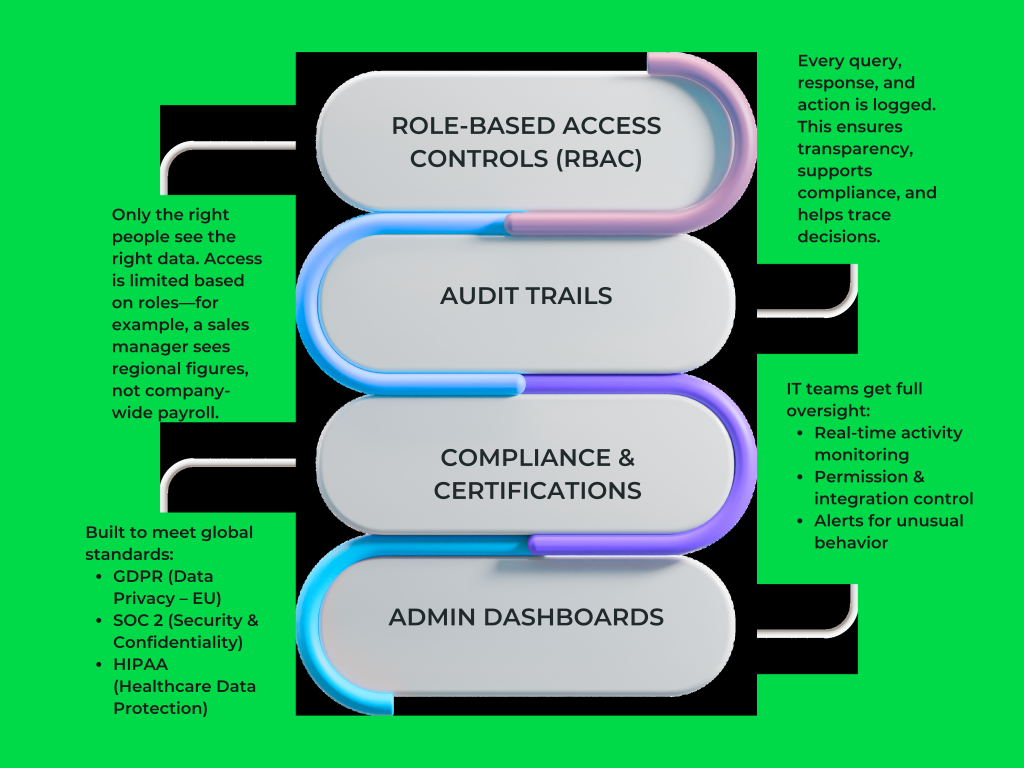
Role-Based Access Controls (RBAC)
Not every employee needs access to every insight. AI assistants use role-based permissions to ensure that individuals only see data relevant to their responsibilities. For example, a regional sales manager may access revenue figures for their area but not company-wide payroll data. These granular permissions protect confidentiality and uphold internal data policies.
Audit Trails for Every Action
Every interaction with the AI assistant—every query asked, insight delivered, or workflow triggered—is logged and traceable. These audit trails help organizations:
- Track usage for compliance
- Identify potential misuse or anomalies
- Review past decisions and their rationale
This transparency builds trust and provides assurance to IT, compliance officers, and leadership alike.
Compliance and Certifications
Modern AI platforms are designed to meet stringent regulatory and industry-specific standards, such as:
- GDPR for data privacy in the EU
- SOC 2 for security, availability, and confidentiality controls
- HIPAA for handling protected health information in healthcare
These certifications aren’t just badges—they represent deeply embedded practices for encryption, data residency, breach response, and access monitoring.
Admin Dashboards and Control Centers
Administrators can monitor AI assistant activity through centralized dashboards. These dashboards offer:
- Real-time usage analytics
- Control over permissions and integrations
- Alert settings for unusual behaviour or access attempts
IT and data governance teams can stay in control without obstructing business users’ productivity.
From Assistant to AI Employee: Real Impact with ConverSight
ConverSight doesn’t just offer an AI assistant—it delivers a fully capable AI employee that understands your business, adapts to your workflows, and proactively drives decisions. It connects across systems, learns from user behavior, and brings insights into your everyday tools like Teams, Slack, or your browser—so intelligence is always at your fingertips.
Unlike traditional assistants that wait for input, ConverSight’s Agentic AI takes the lead:
- Orchestrates end-to-end workflows by integrating with ERPs, CRMs, and WMS platforms—automating tasks like purchase order generation, supplier follow-ups, and replenishment planning.
- Delivers personalized insight coaching tailored to individual roles, surfacing what matters most to supply chain managers, finance leads, or executives.
- Auto-generates reports and storyboards, dynamically adjusting to real-time changes in demand, inventory levels, and supplier performance—no prompt required.
- Operates across platforms, providing conversational access through familiar tools, enabling real-time decisions without breaking the user’s workflow.
Real Impact: AI Employee in the Supply Chain
One mid-sized manufacturer facing persistent stockouts, supply disruptions, and costly inefficiencies turned to ConverSight to bring stability and intelligence to their operations. Challenges like inaccurate forecasting, outdated reporting, and unpredictable vendor lead times were limiting production efficiency and driving up inventory costs.
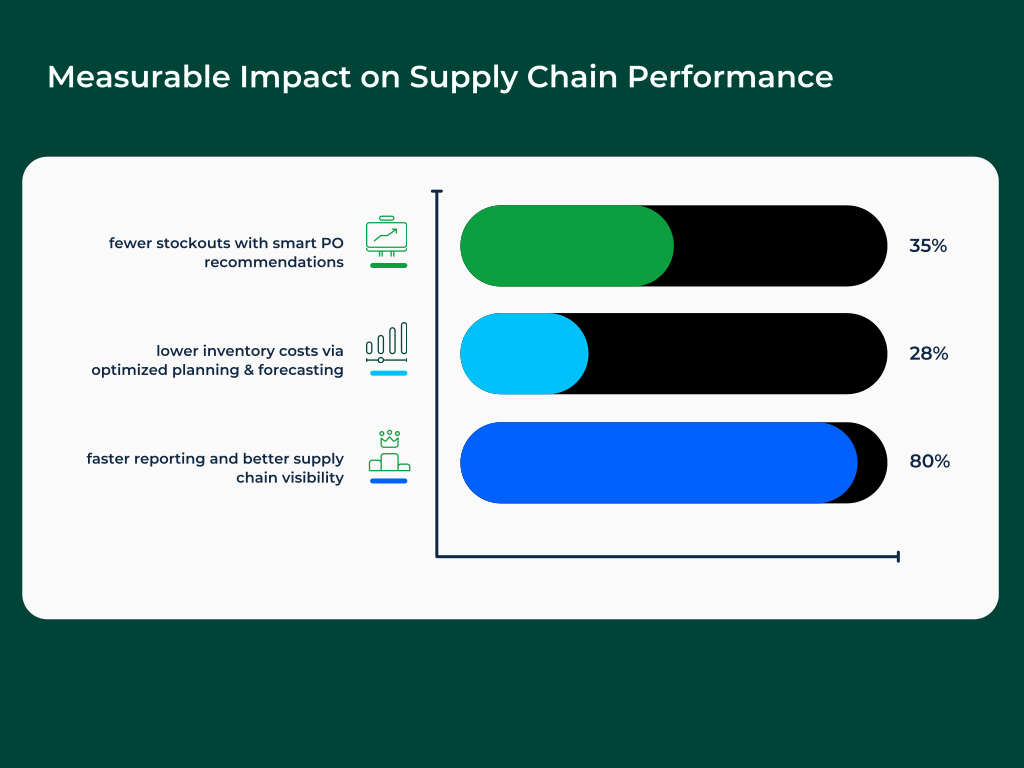
By deploying ConverSight’s AI-powered supply chain assistant, the organization achieved:
- 35% reduction in stockouts, thanks to intelligent purchase order recommendations
- 70% faster reporting and significantly improved supply chain visibility
- 28% lower inventory costs through optimized work order planning and real-time demand forecasting
ConverSight’s AI Assistant connected directly to their ERP system, analyzed real-time demand and supplier data, and proactively surfaced recommendations. Instead of relying on static reports and manual planning, teams were now equipped with a digital employee that continuously monitored the operation, flagged issues before they escalated, and provided prescriptive actions.
Let our AI do the heavy lifting — see how you can plan faster, smarter, and with greater accuracy — Explore More!
Conclusion: Redefining Work with AI Assistants
AI Assistants are transforming the workplace—from static tools to proactive digital teammates that drive decisions, automate actions, and keep teams aligned. They don’t just respond—they anticipate, guide, and execute.
With ConverSight, you gain more than just an assistant—you gain an AI employee that integrates across your systems, delivers real-time insights, and works 24/7 to move your business forward. Explore how ConverSight’s AI-driven platform brings automation, real-time insights, and smarter decisions to your supply chain.