Introduction
In today’s data-driven world, ERP reporting has become more than just a back-office function—it’s the key to making smarter, faster business decisions. Whether it’s tracking inventory, monitoring sales, or forecasting revenue, organizations rely heavily on their ERP data to run operations efficiently.
But the demand is no longer just for static reports. Businesses need real-time access, self-service tools, and AI-powered insights that make ERP data actionable. As we move through 2025, ERP reporting tools are evolving to meet these growing expectations. So, what should businesses expect from ERP reporting tools this year? And which platforms truly deliver? Let’s explore the top 7 tools shaping ERP reporting in 2025—and why ConverSight is emerging as a standout choice.
Challenges in Today’s ERP Reporting
Despite the evolution of ERP systems, reporting remains one of the most common pain points for organizations. Many businesses struggle to turn ERP data into actionable insights due to the following challenges:
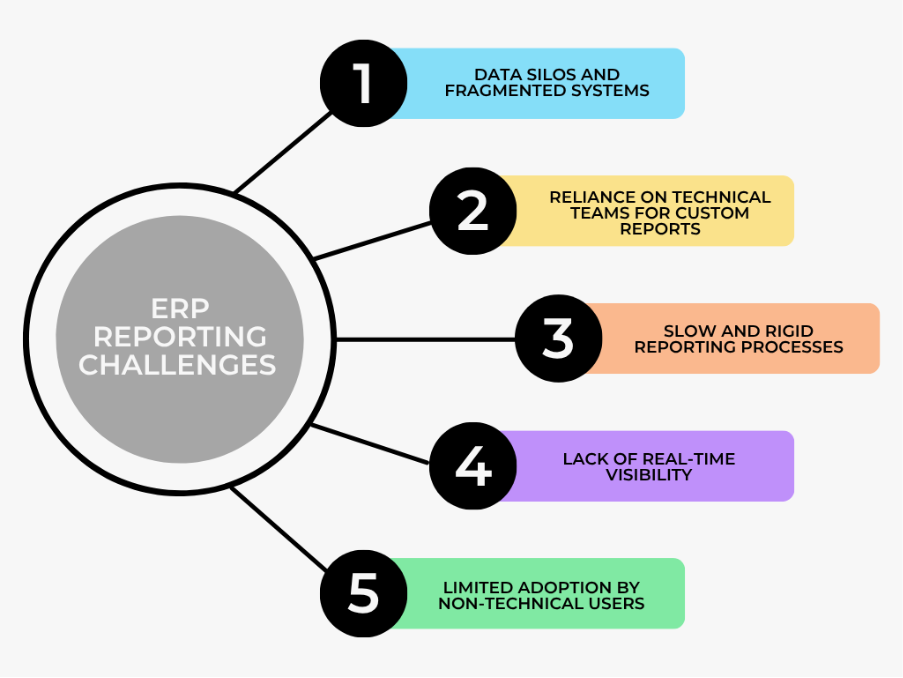
Data Silos and Fragmented Systems
ERP systems often operate alongside multiple disconnected tools—spreadsheets, legacy apps, and niche platforms. These silos make it difficult to consolidate data into a single source of truth, leading to inconsistent reports and decision-making delays.
Reliance on Technical Teams for Custom Reports
Most traditional ERP reporting tools require advanced knowledge of SQL or custom scripting to generate meaningful reports. This puts business users at the mercy of IT or data teams, creating bottlenecks and slowing down decision-making.
Slow and Rigid Reporting Processes
Generating even simple reports can take days due to static templates, manual data extraction, and lack of automation. This rigidity makes it nearly impossible to respond to real-time business needs or dynamic market conditions.
Lack of Real-Time Visibility
Many ERP systems update data in batches or rely on scheduled syncs. This delay in information flow means users often work with outdated data, missing opportunities to act on issues or trends as they arise.
Limited Adoption by Non-Technical Users
The steep learning curve of traditional ERP reporting tools discourages adoption by frontline teams and business leaders. Without an intuitive, self-service interface, insights stay locked in the hands of a few technically skilled individuals, limiting the organization’s agility.
What Makes a Great ERP Reporting Tool Today
Before choosing the right ERP reporting solution, it’s important to understand what sets top-performing tools apart in 2025. As organizations demand faster insights, more intelligent automation, and greater accessibility, the definition of a “great” ERP reporting tool has evolved significantly.
The best platforms today go beyond traditional reporting—they empower users across all functions to make faster, smarter, and more confident decisions. Here are the key capabilities that define modern ERP reporting tools:
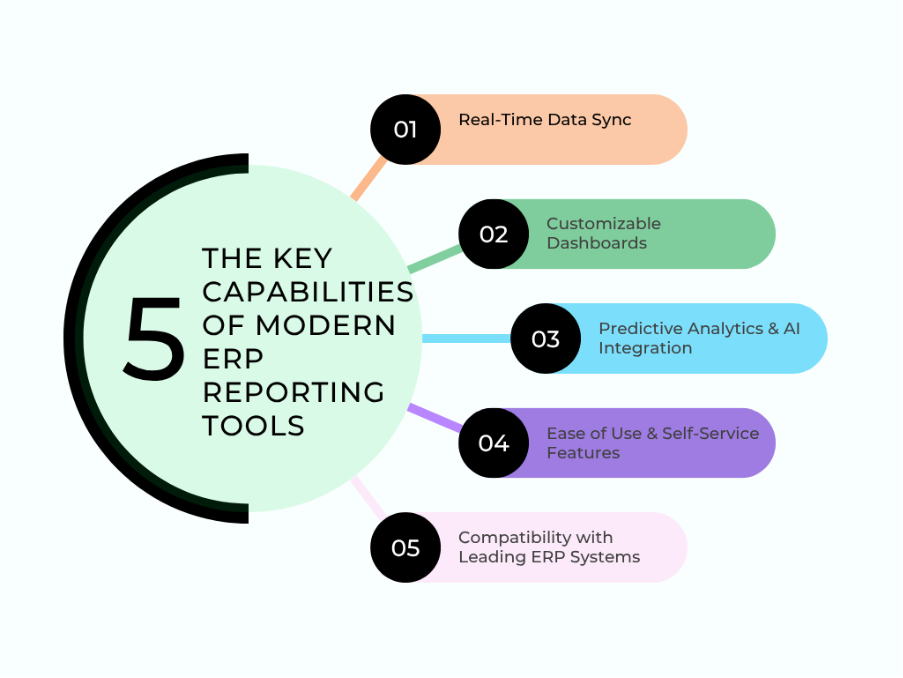
Real-Time Data Sync
Gone are the days when businesses could afford to wait hours—or even days—for updated reports. Today’s leading ERP reporting tools offer real-time data synchronization, ensuring that users are always working with the most current information. This is especially critical for fast-moving operations like supply chain, inventory management, and financial forecasting, where outdated data can lead to costly errors and missed opportunities.
Customizable Dashboards
Every role in an organization views performance through a different lens. Whether you’re a CFO, supply chain manager, or sales executive, a one-size-fits-all dashboard won’t deliver the insights you need. Modern reporting platforms allow users to build personalized dashboards—tailored to their KPIs, departments, and workflows. These dashboards provide visual clarity through intuitive charts, graphs, and metrics, making it easier to spot trends, exceptions, and opportunities at a glance.
Predictive Analytics & AI Integration
The most powerful tools today don’t just tell you what happened—they help you understand why it happened and what might happen next. AI-driven reporting platforms incorporate predictive analytics to forecast trends like sales demand, inventory needs, or cash flow patterns. Some go a step further with prescriptive insights—offering intelligent recommendations based on patterns, anomalies, and business goals. This shift from descriptive to predictive and prescriptive analytics gives businesses a proactive edge in decision-making.
Ease of Use & Self-Service Features
One of the biggest hurdles in traditional ERP reporting is the complexity involved in generating reports. Modern solutions eliminate this barrier by offering intuitive, no-code interfaces that empower non-technical users to access, filter, and explore data on their own. With features like drag-and-drop reporting, natural language queries, and guided templates, users can get the insights they need—without waiting on IT or data teams.
Compatibility with Leading ERP Systems
Flexibility is key. A great reporting tool must integrate seamlessly with a variety of ERP platforms—including SAP, Oracle, NetSuite, Acumatica, Infor, Microsoft Dynamics, and others. Native integrations reduce setup time, eliminate data sync issues, and ensure a smooth user experience. This multi-ERP compatibility is especially important for enterprises running multiple systems or planning future upgrades.
These features enable better decision-making across finance, supply chain, operations, and beyond making reporting a daily driver of strategy.
Top 7 ERP Reporting Tools in 2025
Here’s a look at the top players in ERP reporting today—what they do well, where they fall short, and how they compare.
Power BI
Overview:
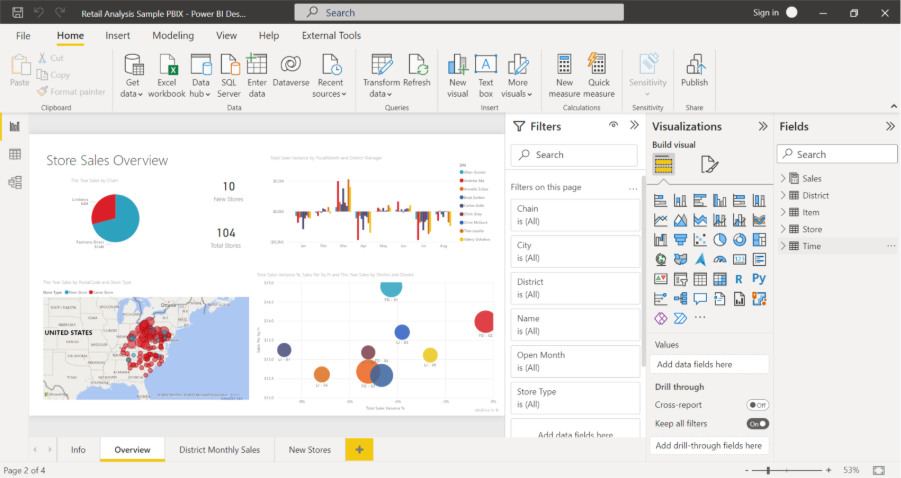
Power BI by Microsoft is a widely used business intelligence tool known for its integration with the Microsoft suite, especially Excel and Azure. It’s a powerful platform for building interactive dashboards and visualizations from ERP data.
Strengths:
- Seamless integration with Microsoft Dynamics and Office tools
- Strong visualization capabilities with drill-down and interactivity
- Large ecosystem and community support
Limitations:
- Requires technical expertise for advanced modelling
- Not very intuitive for non-technical business users
- Limited real-time ERP connectivity without additional setup
Best For:
Organizations already using Microsoft products and Dynamics ERP, with a dedicated IT or data analytics team.
Tableau
Overview:
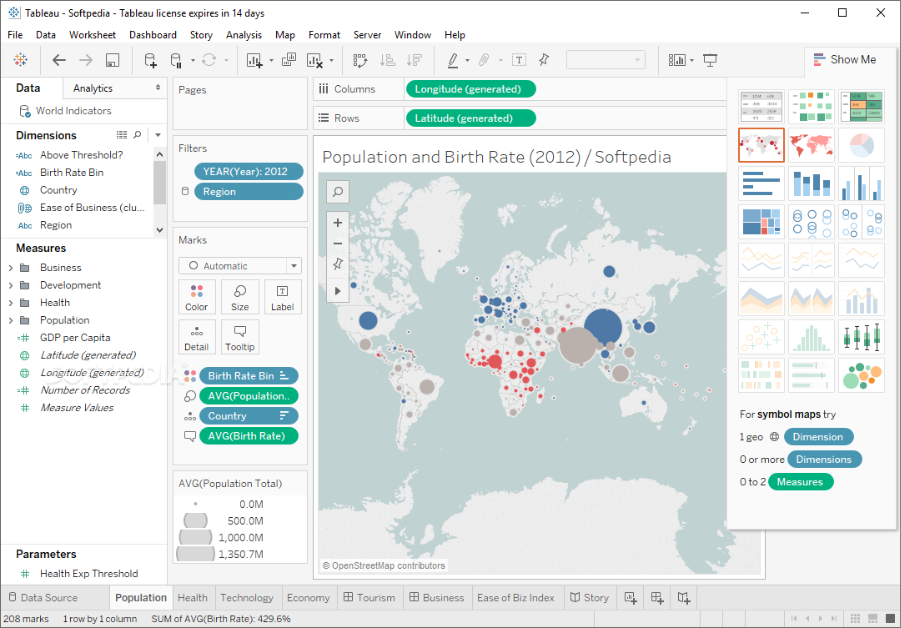
Tableau is a popular data visualization platform known for its storytelling capabilities and visual finesse. It supports a wide range of data sources, though ERP integrations often require configuration or third-party connectors.
Strengths:
- Industry-leading visual design and data storytelling
- Great for data blending across sources
- Rich dashboarding experience
Limitations:
- Complex ERP data extraction and prep
- Requires connector tools for ERP platforms like SAP, Oracle
- Expensive licensing and setup
Best For:
Organizations focused on rich visuals and complex analysis—ideal for BI teams that prioritize insights over out-of-the-box ERP simplicity.
SAP Analytics Cloud
Overview:
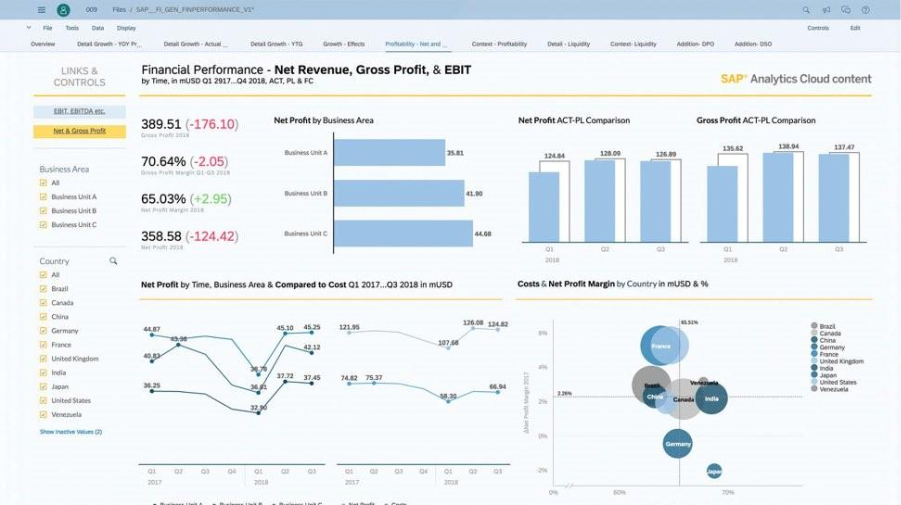
Built specifically for the SAP ecosystem, SAP Analytics Cloud (SAC) offers a cloud-first BI and planning solution. It’s tightly woven into the SAP landscape, making it a natural choice for users of SAP S/4HANA or SAP Business One.
Strengths:
- Native support for SAP data sources
- Strong planning and forecasting features
- Unified analytics and enterprise planning
Limitations:
- High cost
- Steep learning curve for non-SAP experts
- Best used only within SAP environments
Best For:
Large enterprises that are deeply invested in SAP and want unified reporting and planning capabilities.
Oracle Analytics Cloud
Overview:
Oracle Analytics Cloud (OAC) is a robust BI platform designed to work with Oracle ERP Cloud and on-premises solutions. It offers scalable reporting and machine learning capabilities, with a focus on large enterprises.
Strengths:
- Comprehensive analytics with AI and machine learning
- Built-in support for Oracle ERP systems
- Security and scalability for enterprise-grade deployments
Limitations:
- Not beginner-friendly—requires IT involvement
- Lengthy setup and integration cycles
- Limited usability outside Oracle ecosystem
Best For:
Enterprises using Oracle Cloud ERP or E-Business Suite with internal IT support for ongoing reporting management.

Qlik Sense
Overview:
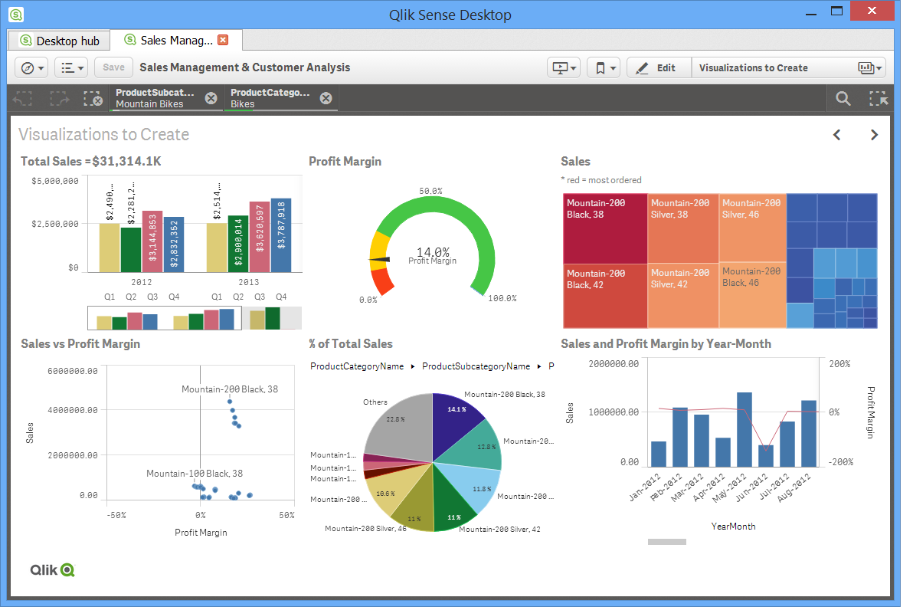
Qlik Sense is a modern analytics platform built on an associative data engine that allows users to explore data intuitively. It’s known for its powerful in-memory processing and flexible dashboards.
Strengths:
- Associative model for dynamic data exploration
- Strong self-service analytics for trained users
- Extensible through APIs and scripting
Limitations:
- ERP integrations require setup and some customization
- Not ideal for users new to BI or self-service tools
- Steeper learning curve than plug-and-play options
Best For:
Mid to large businesses with experienced BI teams who value control and deep analytical capabilities.
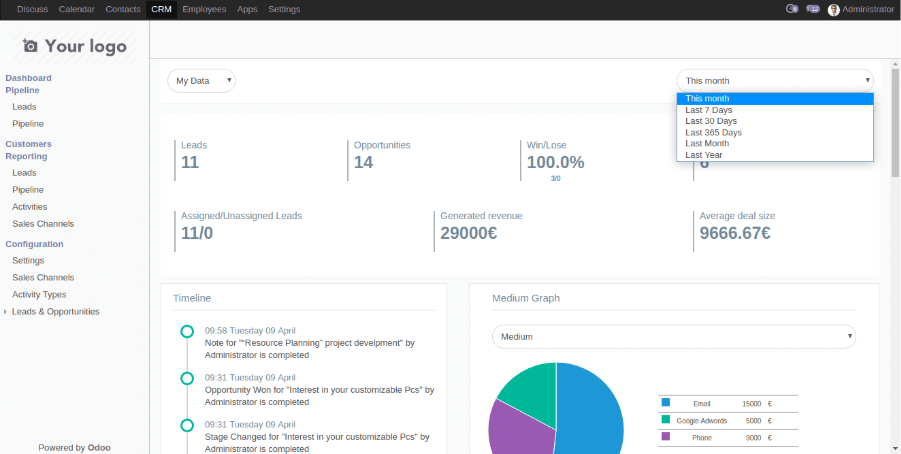
Odoo
Overview:
Odoo is a modular open-source ERP platform with built-in reporting tools. While the native reports are basic, it offers flexibility for companies that want to customize dashboards or connect external BI tools.
Strengths:
- Cost-effective and open source
- Fully customizable modules
- Great for small to mid-sized businesses
Limitations:
- Native reports are limited and lack depth
- Requires technical setup or external tools for visual reporting
- Lacks AI-powered forecasting
Best For:
Small businesses that need flexibility, budget control, and open-source freedom for ERP and reporting.
ConverSight
Overview:
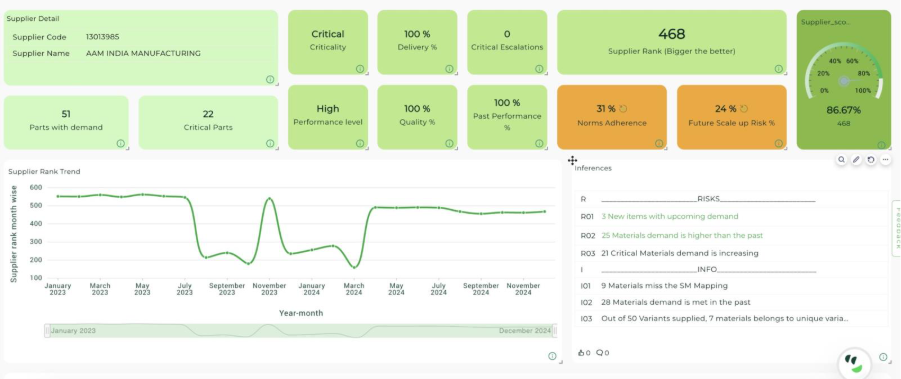
ConverSight is an AI-driven reporting and analytics platform designed specifically for ERP users. Its voice-enabled and natural language interface allows users to interact with data in real-time—no SQL or data teams required.
Strengths:
- AI-powered, conversational reporting with NLP
- Real-time plug-and-play ERP integrations
- Predictive and prescriptive analytics for actionable insights
- Self-service access for business users
Stands Out For:
- Democratizing data—users can ask questions like “What are last quarter’s top-selling SKUs?” and get instant insights
- Intuitive dashboards and alerts personalized by role
- Seamless integration with ERPs like Acumatica, Priority, SAP, Oracle, and others.
- Seamless integration with 150+ data connectors.
Best For:
Organizations seeking to modernize their ERP reporting with AI, reduce dependency on IT teams, and empower every user to make data-driven decisions.
→ See ConverSight in Action – Book a Demo
Why ConverSight Stands Out in 2025
In a sea of reporting tools, ConverSight stands out by transforming the user experience from static reports to interactive decision intelligence.
Here’s what makes it different:
- Built for Modern, Agile Teams
ConverSight is designed to support fast-paced decision-making, offering instant access to ERP data across systems and departments.
“Before Athena, our on-premises data analytics lacked flexibility, required heavy maintenance and made data access difficult. Moving to the cloud seemed like a million-dollar, year-long project. With Athena AI, we delivered our first use case in under three months.”
Gaurav Gulati Chief Information Officer, Motherson
- AI + Natural Language = Instant Insights
Business users can ask questions like “What were our top 5 selling products last quarter?” and get real-time answers—no SQL, no BI team.
Athena transformed our decision-making process. What once took hours now happens in minutes — with accuracy and reliability we didn’t have previously. Athena’s proactive insights ensure our teams stay informed, enabling faster action to mitigate risks and maintain production flow.
Senior Supply Chain Leader, Daimler
- True Self-Service Reporting
From CFOs to supply chain managers, anyone can explore, filter, and visualize data on their own.
I can go through the forecasting at a glance and instantly identify where we might potentially be in trouble. With ConverSight, we can look at the same data in different ways, consolidated in a practical and easy manner.
David Muller, Director of Business Development, Cascadia Motion.
- Predictive and Prescriptive Analytics
Not just what happened—but what’s likely to happen and what you should do next.
“Athena has significantly improved our demand forecasting accuracy. We previously struggled with predicting seasonal spikes, but Athena’s advanced modeling and adaptive learning have helped us refine our approach. By continuously analyzing SKU-level data, we can now make better decisions and optimize our supply chain planning. The ability to freeze forecasts for key periods and validate predictions with actual sales data has given us greater confidence in our planning. The improvements we’ve seen in forecast accuracy are game-changing for our operations.”
Ruby Gangwar, Senior Planning Manager, House of Spices.
- Proven Customer Success
Customers report significant time savings, better visibility, and faster decisions by layering ConverSight on top of their existing ERP systems.
“Hiring Athena has jumpstarted a long-awaited digital transformation initiative that is changing the way our entire organization views supply chain, planning and selling.”
Steve Carpenter – Supply Chain, Logistics and QMS
Turn ERP Data into Decisions → Download the ERP Whitepaper
Conclusion: The Future of ERP Reporting is Here
ERP reporting in 2025 is no longer about just generating charts and tables. The future is conversational, intelligent, and fast – and ConverSight is leading this shift.
If you’re evaluating ERP reporting tools, consider what truly empowers your users to act -not just analyze. With plug-and-play ERP compatibility, built-in AI, and natural language access, ConverSight offers a next-generation reporting experience for today’s data-driven businesses.