Transforming automotive innovation through intelligent data and decision-making
The Rise of AI in the Automotive Industry
The automotive industry is experiencing an unprecedented transformation, with AI redefining what’s possible across every stage — from concept design to aftermarket service. Artificial Intelligence is revolutionizing how vehicles are designed, produced, and maintained, creating a smarter, faster, and more resilient ecosystem driven by intelligent, data-based decisions. From Generative AI enabling engineers to design lighter, more efficient components to AI-powered robots ensuring precision and predictive maintenance minimizing downtime, the industry is shifting from experience-led operations to insight-driven excellence.
Beyond manufacturing, AI optimizes logistics and supply chains by forecasting demand, managing inventory, and ensuring agility amid global disruptions. Unified AI analytics platforms now empower manufacturers and OEMs to make connected, real-time decisions by consolidating data from multiple systems into a single source of truth. This evolution marks a shift from static reporting to proactive decision intelligence. In this blog, we’ll explore the leading AI companies driving this shift — and how ConverSight is setting a new benchmark by delivering contextual, actionable insights that help automotive leaders make smarter, faster decisions across their value chain.
The Need for AI Analytics in Automotive Operations
The automotive industry thrives on precision — every decision, from sourcing raw materials to assembling a finished vehicle, depends on efficiency, timing, and data accuracy. Yet, as manufacturing networks become more global and consumer expectations evolve faster than ever, the complexity behind these operations has grown exponentially. This is where AI analytics has become a strategic necessity, enabling manufacturers to not only keep pace with change but to stay ahead of it.
Challenges in Modern Automotive Operations
One of the most pressing challenges for AI for automotive companies to address is the complexity of global supply chains. A single vehicle can contain over 30,000 parts sourced from hundreds of suppliers worldwide. Managing that network — ensuring the right part arrives at the right time, at the right cost — is no small feat. Disruptions such as material shortages, geopolitical shifts, or logistics delays can ripple through production schedules, halting assembly lines and inflating costs.
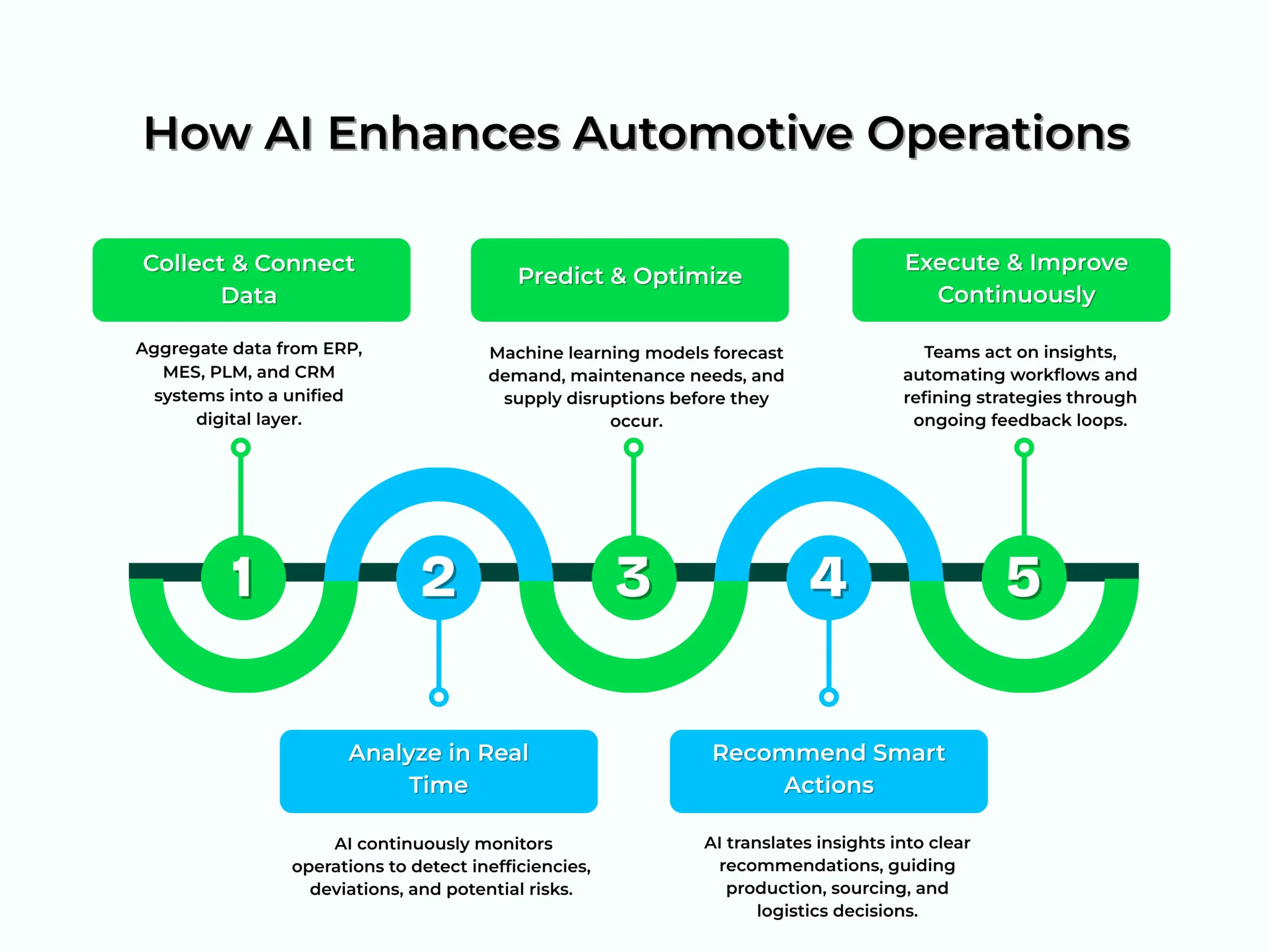
Another major obstacle is data fragmentation. Automotive manufacturers depend on multiple enterprise systems — ERP for resource planning, MES for shop-floor control, PLM for product lifecycle management, and CRM for customer insights. Each system generates vast amounts of data, yet these datasets often exist in silos, making it difficult for decision-makers to gain a unified view of operations. Without a connected framework, leaders spend more time reconciling spreadsheets than interpreting insights, leading to slower response times and missed opportunities.
On top of that, there’s an increasing pressure for real-time insights. Traditional reporting tools can show what happened, but today’s automotive leaders need to know why it happened — and more importantly, what will happen next. In a world where customer demand shifts overnight and production schedules hinge on global logistics, agility is everything. Decision-makers require tools that not only visualize data but also guide actions and surface recommendations instantly.
AI’s Role in Overcoming These Challenges
This is where AI analytics transforms from a tool to a game-changer. Modern AI for automotive companies integrates data streams across all enterprise systems, creating a single, dynamic layer of intelligence that spans departments and functions. Instead of manually gathering and interpreting information, teams can rely on AI to continuously analyze data, detect anomalies, and predict potential issues before they occur.
AI-powered analytics automate repetitive tasks like quality checks, performance tracking, and demand forecasting, freeing up teams to focus on innovation and strategy. For instance, predictive algorithms can anticipate when machinery is likely to fail, allowing for maintenance to be scheduled proactively — minimizing downtime and optimizing asset utilization. Similarly, AI models can analyze supplier performance, logistics timelines, and production rates to recommend the most efficient sourcing or production strategy.
Perhaps the most transformative benefit is data-driven collaboration. By connecting engineering, production, and supply chain teams through a unified platform, AI enables everyone to make decisions based on the same insights. Engineers can understand how design changes impact manufacturing timelines, while operations teams can adapt to material constraints in real time. This level of interconnected visibility breaks down silos, aligns departments, and ensures every decision contributes to overall efficiency and profitability.
Top Automotive AI Companies Leading the Change
As the automotive industry becomes increasingly data-driven, manufacturers, OEMs, and suppliers are relying on advanced analytics platforms to reimagine how they plan, produce, and deliver vehicles. These AI companies are at the forefront of a digital shift — helping organizations evolve from descriptive reporting to intelligent, insight-led decision-making. Through capabilities such as self-service analytics, predictive modeling, and interactive visualization, these platforms allow teams to uncover hidden trends, detect inefficiencies, and anticipate future challenges with greater precision and confidence.
Beyond operational visibility, these technologies are enabling manufacturers to act faster — optimizing production schedules, enhancing quality control, and improving supply chain coordination across global networks. Yet, despite their sophistication, most of these platforms stop at analytics — they explain what happened, but not what to do next.
This is where the distinction between analytics and decision intelligence becomes vital. As the next phase of AI transformation unfolds, organizations need systems that go beyond reporting and visualization to provide context-aware guidance, actionable recommendations, and continuous learning. The following are some of the leading companies shaping the automotive analytics space today — each playing a critical role in redefining how data is used to drive smarter, faster decisions across the automotive value chain.
ThoughtSpot
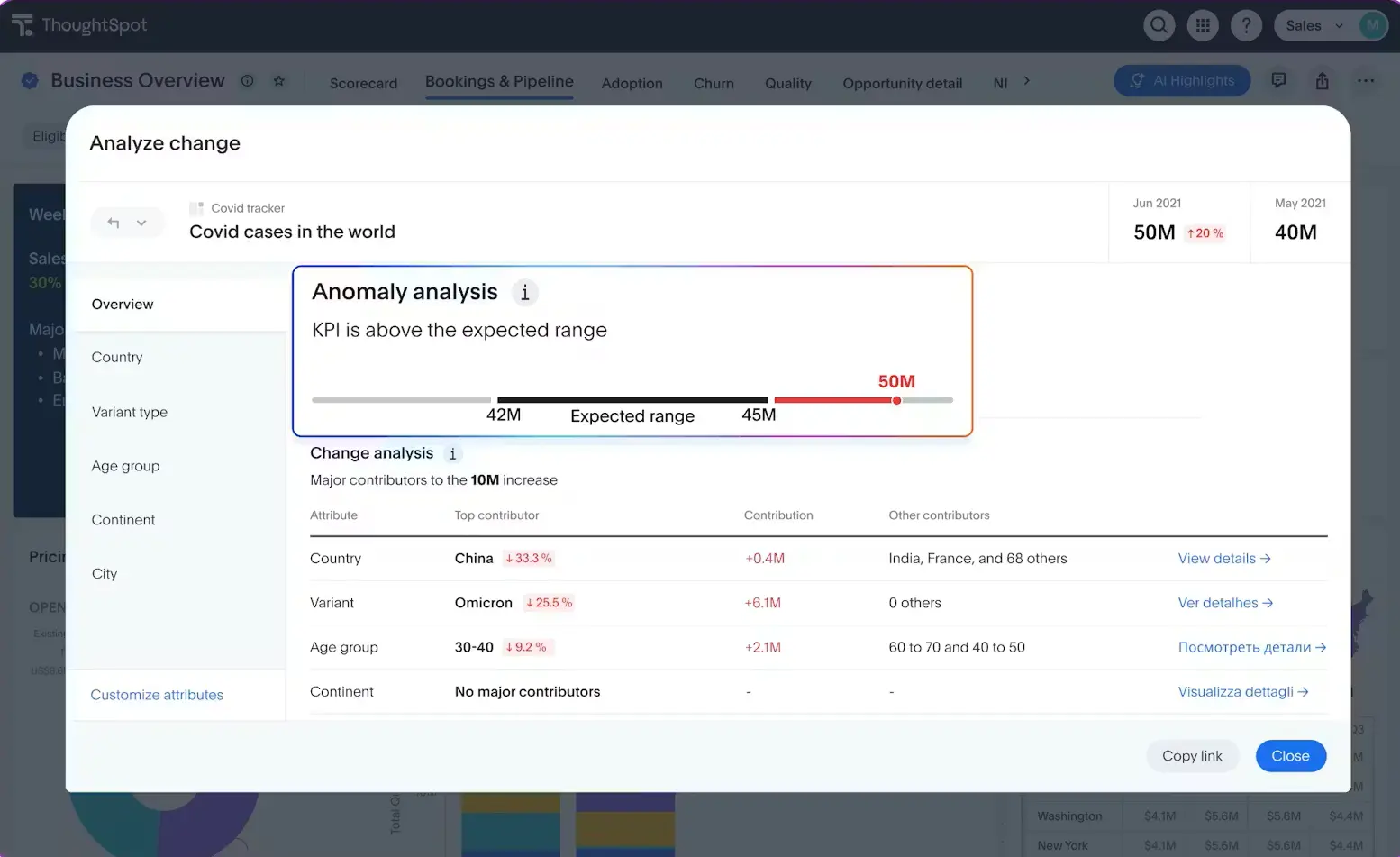
ThoughtSpot has redefined analytics with its intuitive, search-based data exploration interface. By enabling users to type questions in natural language — much like a Google search — and receive instant insights, it democratizes access to data across all levels of an organization. For automotive manufacturers, ThoughtSpot proves particularly valuable in analyzing production line data, supplier performance, and quality trends without needing deep technical expertise. Managers can instantly query metrics such as “Which supplier caused the most delays this quarter?” or “What’s the trend in assembly defects across plants?” and receive instant, visual answers.
Tableau
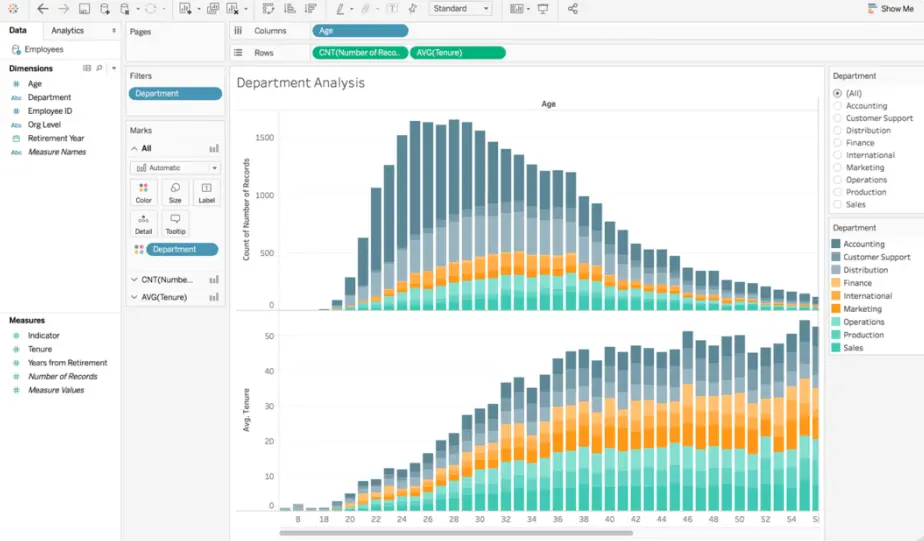
Tableau remains one of the most recognized platforms for data visualization, offering powerful drag-and-drop capabilities and a broad library of chart types and dashboards. Its flexibility and visual appeal make it a favourite among data teams across industries. Tableau is often used to monitor manufacturing KPIs such as production yield, defect rates, or inventory flow. It enables operational teams to visually track performance trends, optimize process efficiency, and identify bottlenecks across plants or supply chains.
Microsoft Power BI
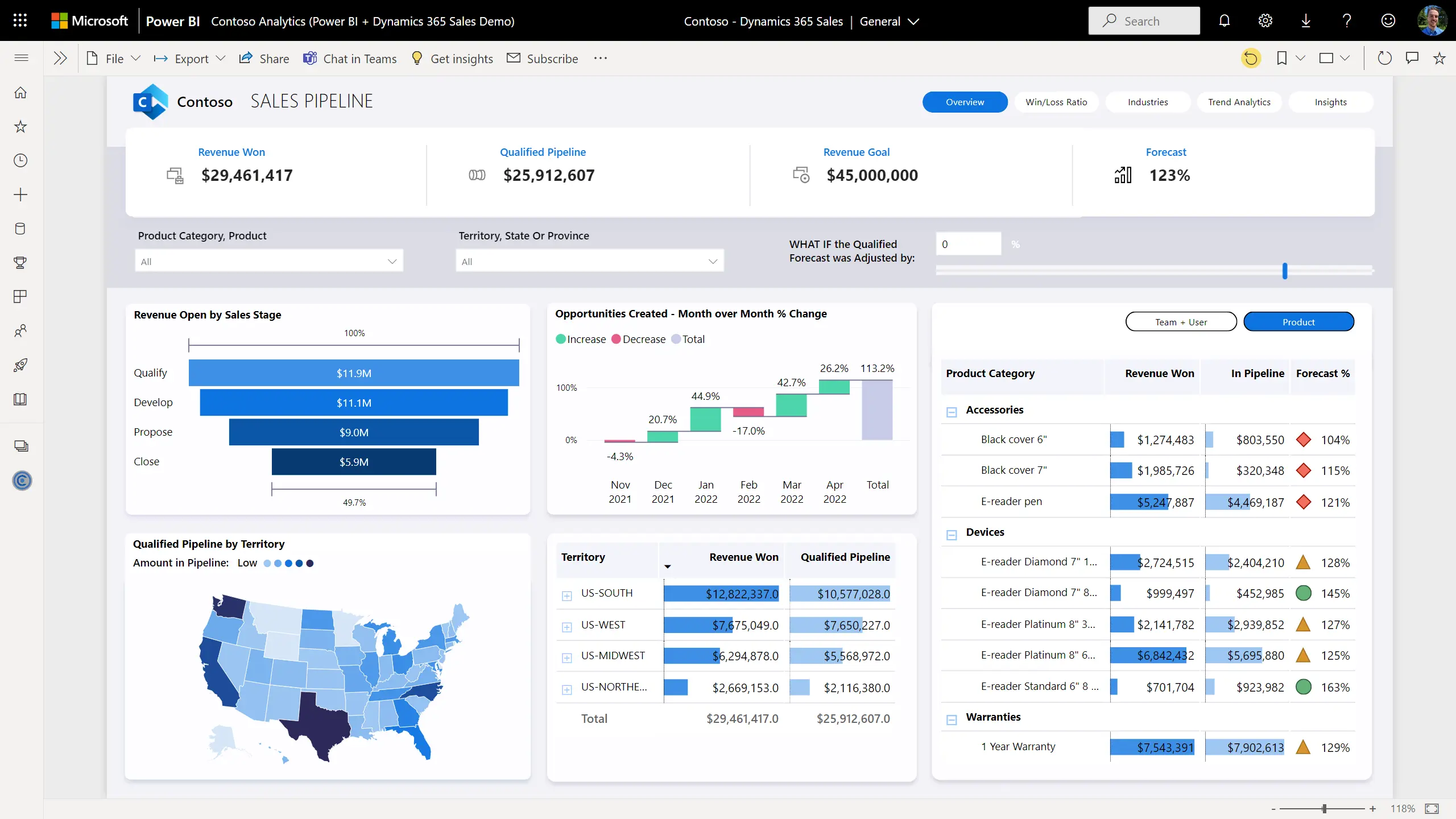
Microsoft Power BI brings enterprise-scale analytics to organizations, tightly integrating with other Microsoft tools like Excel, Azure, and Dynamics 365. It offers advanced data modelling, AI capabilities, and real-time dashboard updates, making it one of the most versatile platforms for large-scale data management. Power BI serves as a bridge between different business systems — consolidating production, logistics, and financial data into a single interactive view. Its predictive features allow decision-makers to forecast supply chain risks, monitor equipment performance, and enhance visibility into operations at every stage of the manufacturing process.
Qlik Sense
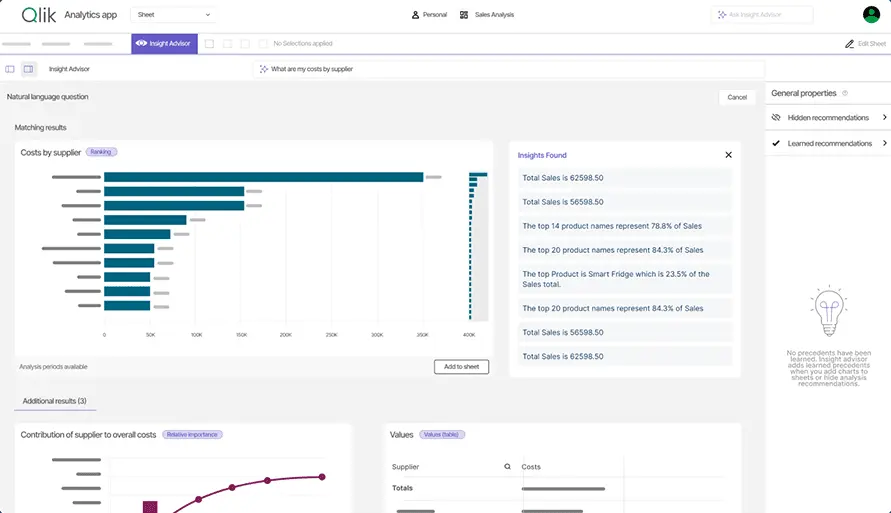
Qlik Sense distinguishes itself through its associative data modeling, enabling users to explore information across multiple data sources interactively. Rather than relying on predefined queries, it allows free exploration, uncovering hidden relationships and trends that may go unnoticed in traditional BI tools. Qlik Sense supports detailed analyses of parts traceability, supplier quality, and process efficiency. Manufacturers leverage it to connect production data with logistics and quality control, ensuring traceability and compliance throughout the supply chain.
ConverSight: Driving the Future of Automotive AI
As the demand for smarter, faster, and more autonomous decision-making grows, ConverSight has emerged as a leading force in transforming how AI for automotive companies operates. Unlike traditional analytics platforms that stop at data visualization, ConverSight enables Decision Intelligence — empowering automotive manufacturers, OEMs, and suppliers to move from insight to impact with agility and confidence.
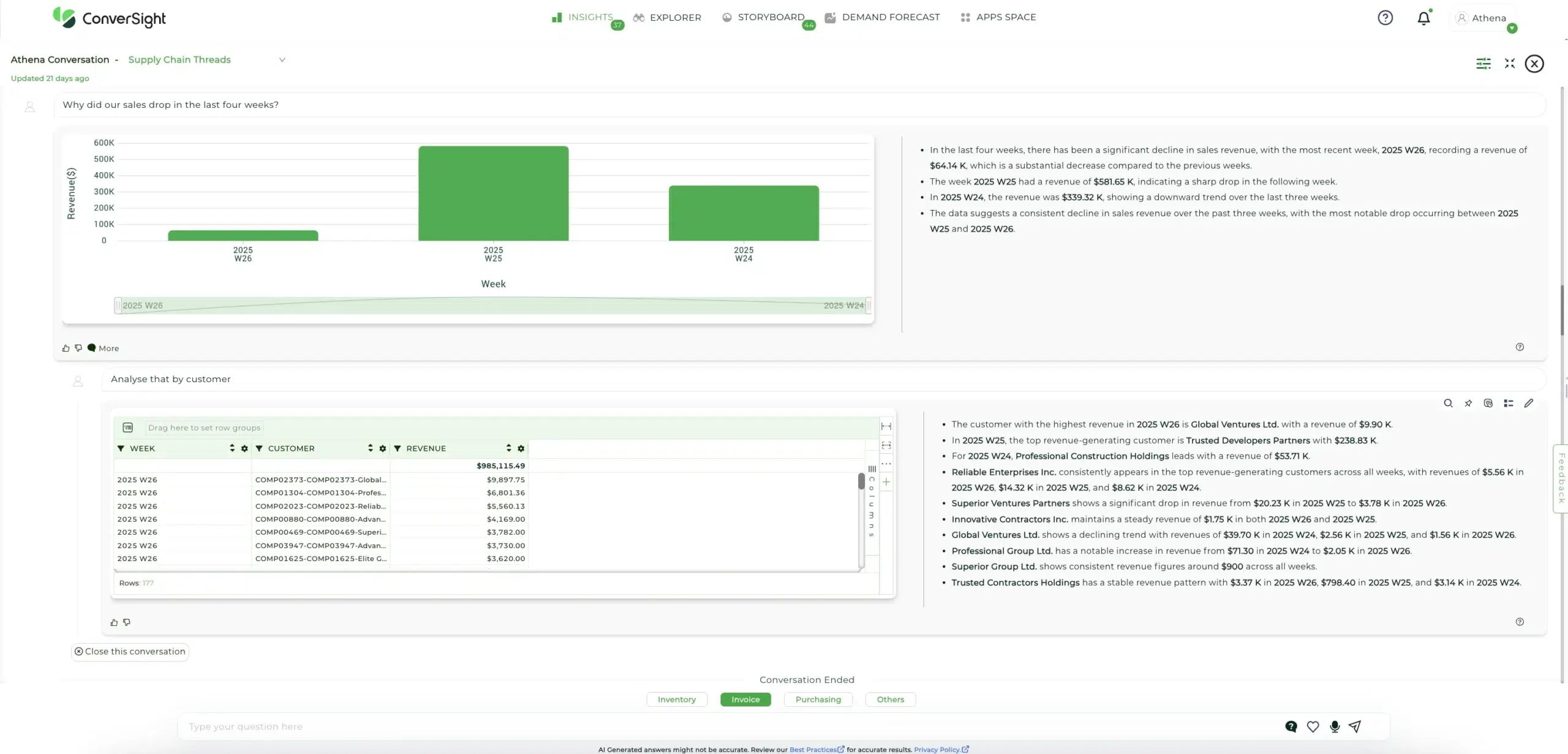
At the heart of ConverSight lies Athena, the AI agent that acts as a digital decision partner for every user. Athena goes beyond conventional dashboards by delivering conversational analytics — allowing business users to simply ask questions in natural language and receive instant, contextual responses. Instead of spending hours building reports or querying databases, users can simply ask, “What’s our current parts availability across plants?” or “How is supplier lead time impacting production schedules this week?” — and Athena delivers precise answers in seconds.
ConverSight’s contextual insights are tailored to each user’s role and operational focus. Whether it’s a production planner tracking output, a procurement manager optimizing supplier performance, or a quality engineer monitoring defect trends, Athena personalizes information delivery based on what truly matters to the user. This ensures that decision-making is not only data-driven but also context-aware — bridging the gap between analytics and execution.
With ConverSight, manufacturers gain a unified perspective of their operations, enabling them to:
- Forecast demand with higher accuracy and adjust production plans in real time.
- Monitor supplier performance to ensure consistent part quality and on-time delivery.
- Optimize inventory to reduce carrying costs and prevent shortages.
- Enhance aftermarket analytics to improve customer satisfaction and parts availability.
One of ConverSight’s biggest differentiators is its conversational interface, which allows users to literally “talk to their data.” This natural, intuitive approach eliminates the technical barrier between business users and insights — creating a data culture where decisions are collaborative, immediate, and informed.
Unlike static BI models, ConverSight’s embedded intelligence continuously evolves with business data. As the system learns from user interactions and outcomes, its recommendations become smarter, more accurate, and more aligned with organizational goals. This adaptability ensures that ConverSight remains relevant as the automotive ecosystem evolves — from traditional manufacturing to electric vehicle (EV) production and beyond.
How ConverSight Delivers Value:
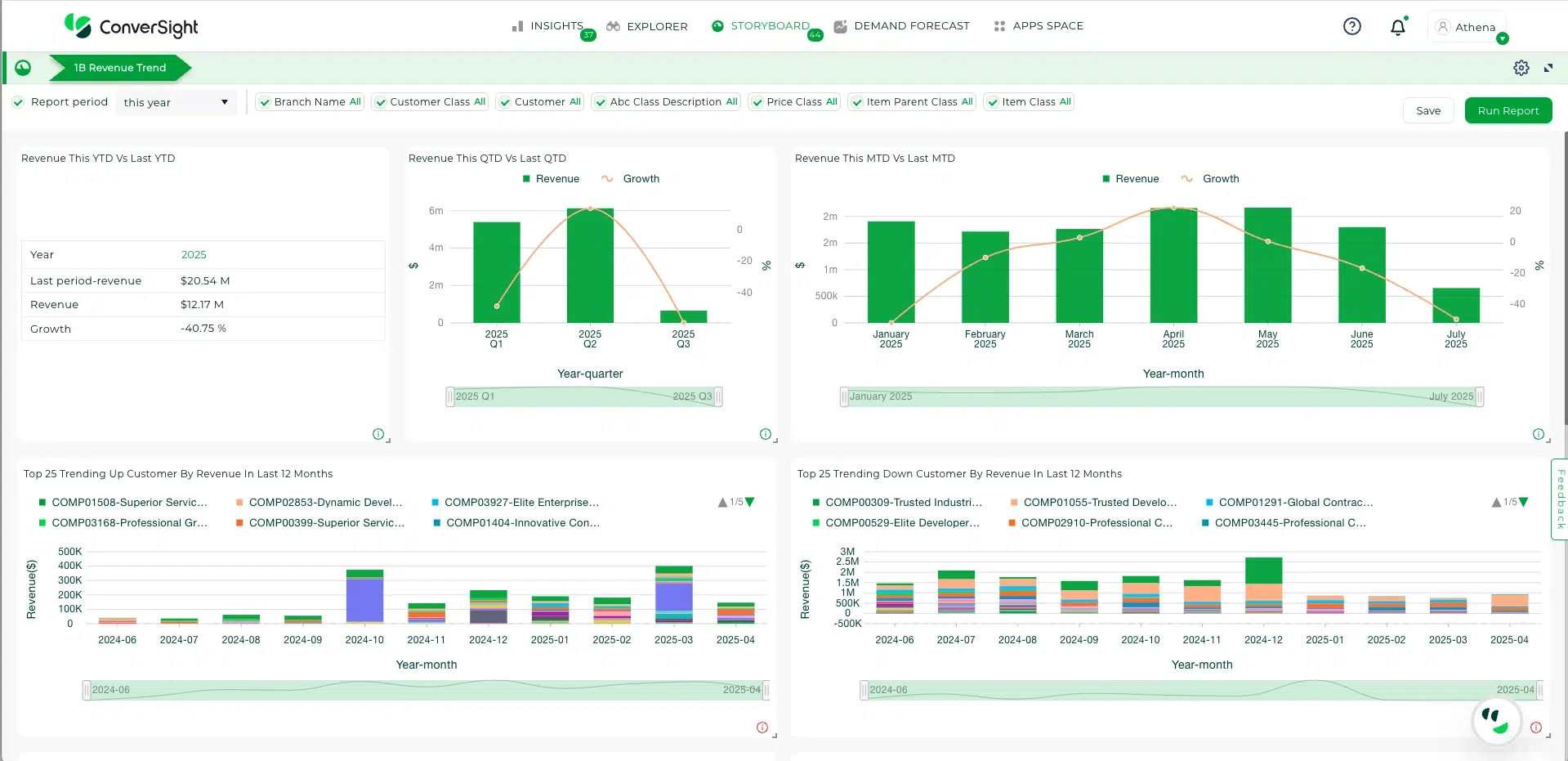
- Demand Forecasting: Athena predicts future part and vehicle demand based on historical trends and external variables such as supplier delays or market fluctuations.
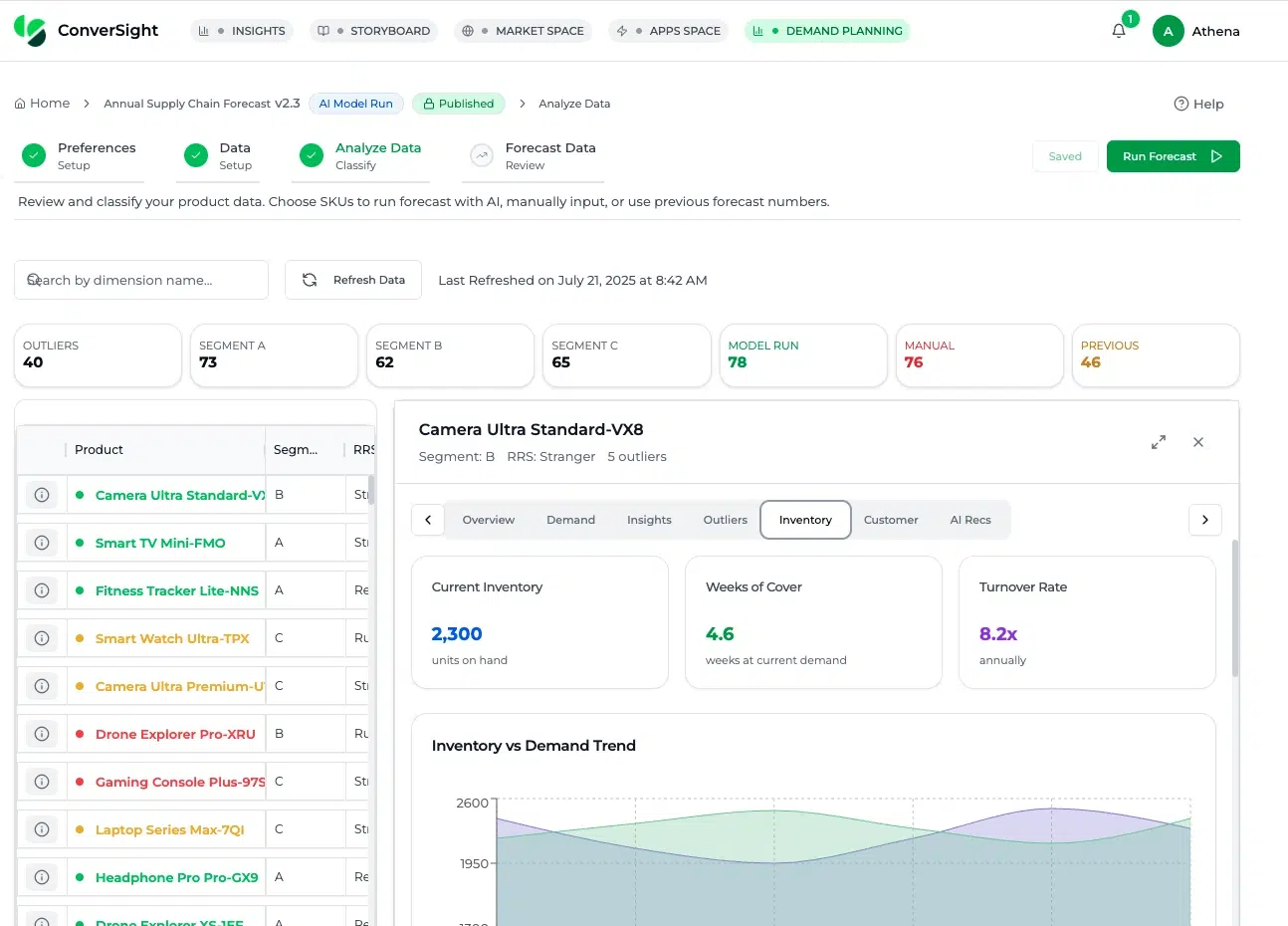
- Supplier Analytics: Managers gain real-time visibility into supplier lead times, performance scores, and compliance metrics — enabling proactive action before disruptions occur.
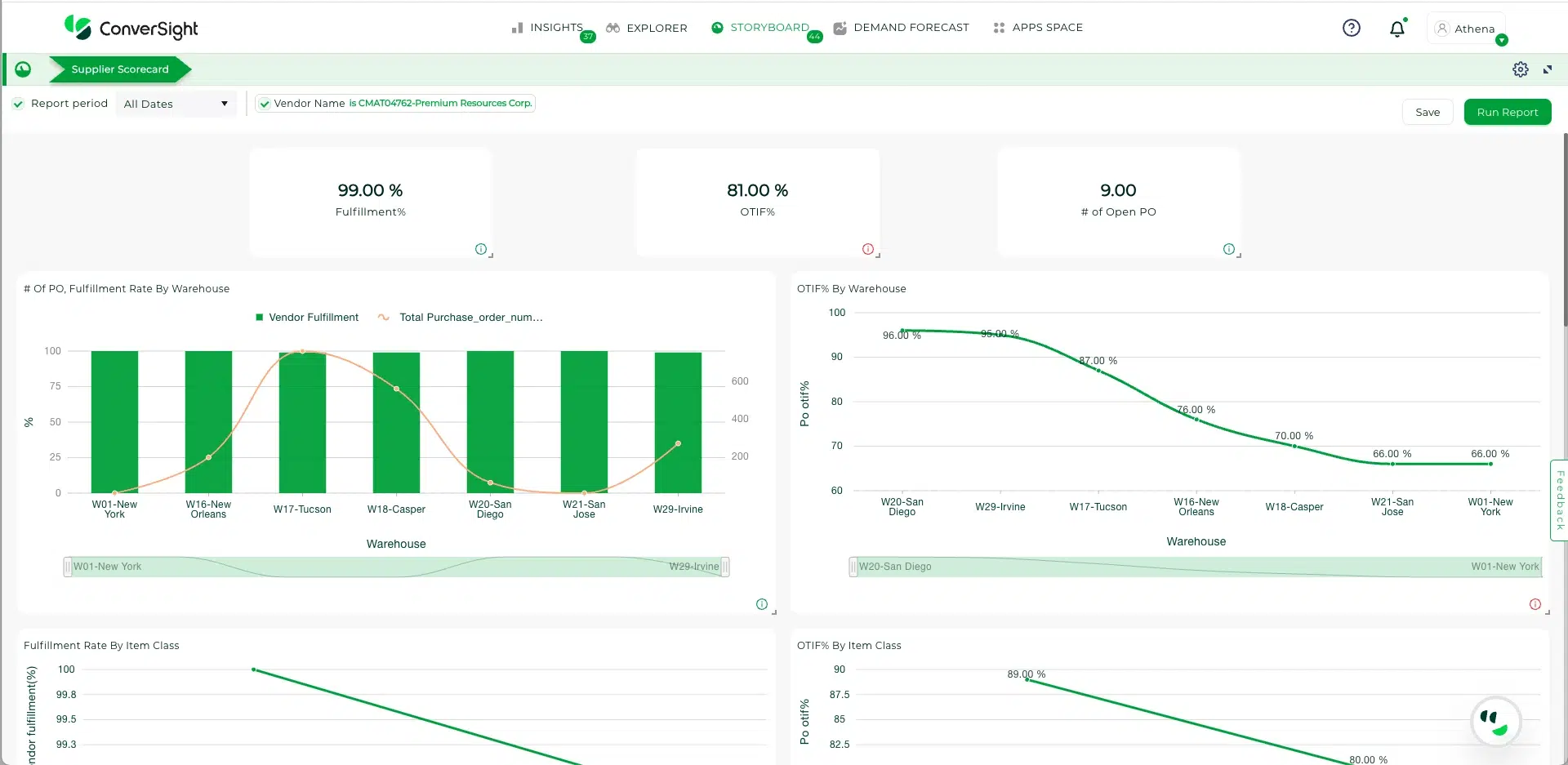
- Parts Availability Optimization: The platform recommends inventory adjustments and alternative sourcing strategies to minimize downtime and maintain production continuity.
- Athena Threads: Enables ongoing, context-aware conversations where users can revisit, refine, and continue previous data discussions — ensuring continuity in decision-making without starting from scratch.
Drive your automotive operations forward with ConverSight -> Learn More!
Why ConverSight Stands Out Among Automotive AI Companies
While most AI analytics tools help visualize and interpret data, ConverSight goes several steps further — transforming data insights into real-time, actionable intelligence. Its strength lies in bridging the gap between analytics and decision-making, enabling manufacturers to not only see what’s happening but also understand why it’s happening and what to do next.
Unlike traditional BI tools that depend on static dashboards or limited predictive modules, ConverSight delivers a unified Decision Intelligence framework — integrating conversational AI, predictive modeling, and prescriptive recommendations in one seamless environment. This makes it especially powerful for the automotive sector, where the pace of operations and complexity of data demand constant, proactive responses.
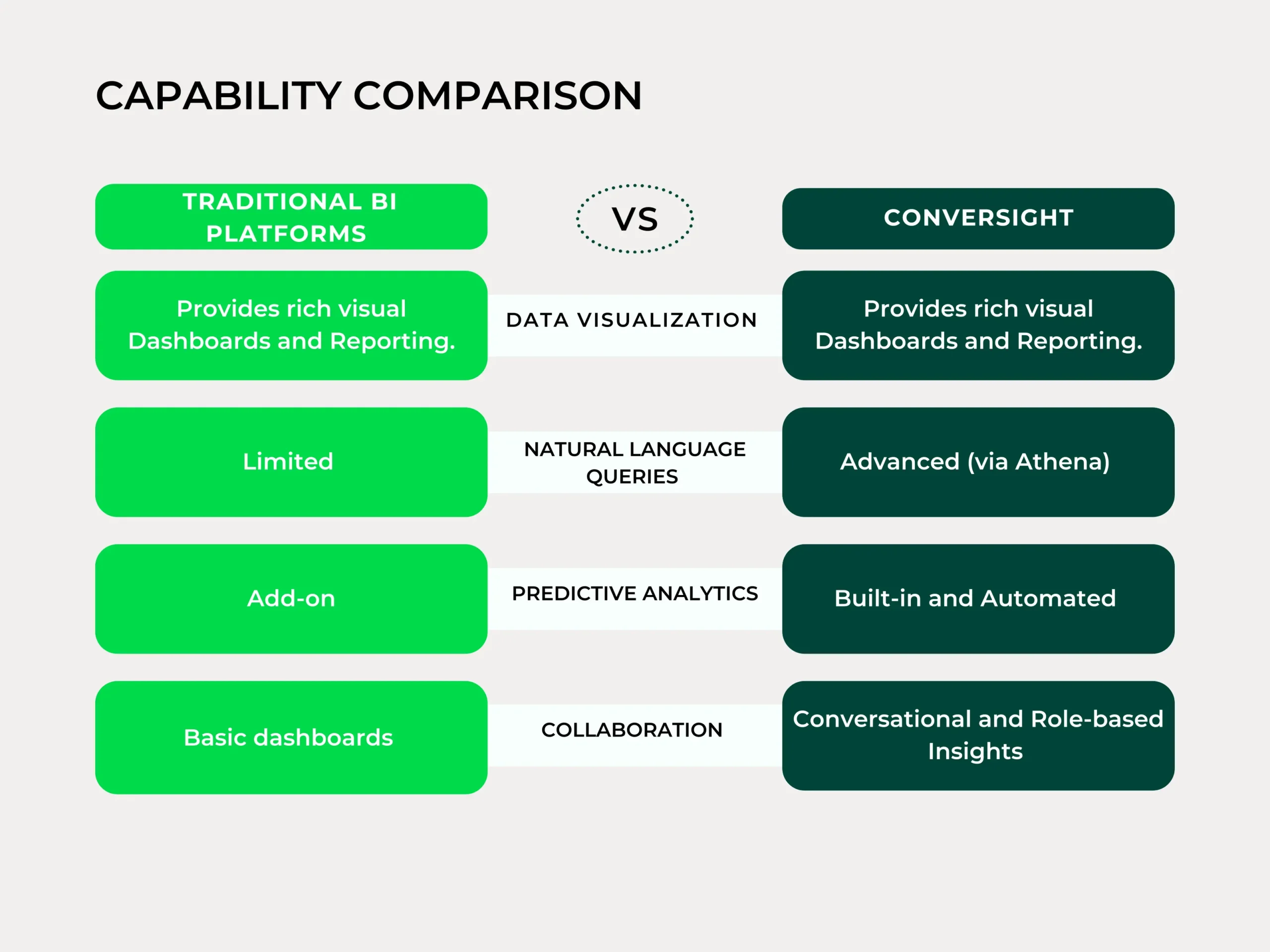
This distinction makes ConverSight not just an analytics companion, but a strategic decision partner that empowers every function — from engineering and procurement to logistics and after-sales.
Customer Impact: Daimler
A global leader like Daimler operates one of the world’s most complex automotive supply chains — spanning thousands of suppliers, parts, and production facilities. With increasing demand variability and supply disruptions, Daimler needed a smarter way to connect data, predict outcomes, and act proactively.
Using ConverSight’s Decision Intelligence Platform, Daimler was able to:
- Predict demand for parts and vehicles with higher precision by leveraging Athena’s forecasting models — aligning production output with real-time market trends and sales data.
- Optimize supplier performance by continuously monitoring lead times, quality scores, and delivery reliability — identifying risks before they impacted production.
- Increase logistics visibility with proactive alerts on potential shipment delays or bottlenecks, enabling teams to reroute deliveries and maintain timelines.
- Improve cross-functional collaboration through Athena’s conversational interface, allowing planners, engineers, and operations teams to share insights and make faster, aligned decisions.
Daimler reported greater forecasting accuracy, reduced production slowdowns, and more synchronized supplier operations — showcasing how ConverSight’s AI-driven intelligence transforms complex manufacturing ecosystems into agile, insight-led networks.
Values achieved:
- 30% improvement in demand forecasting accuracy, aligning production output with real-time sales and inventory trends.
- 25% reduction in supplier-related delays, driven by predictive visibility into lead times, delivery reliability, and quality performance.
- 20% faster logistics response time, as Athena proactively flagged potential disruptions and recommended rerouting options.
- 40% increase in cross-department collaboration, with planners, engineers, and procurement teams accessing shared conversational insights in real time.
Discover how ConverSight transforms automotive operations through decision intelligence -> Explore More!
Conclusion
AI has become the cornerstone of innovation in the automotive industry — revolutionizing how manufacturers design, produce, and deliver vehicles. From the platforms providing intuitive analytics to those enabling predictive decisions, these technologies are reshaping every stage of the value chain.
Among the top players driving this transformation, ConverSight stands apart as the next generation of automotive decision intelligence. By merging conversational AI with predictive and prescriptive capabilities, ConverSight empowers manufacturers to not only understand their data but to act on it instantly and intelligently.
As automotive businesses gear up for a data-driven future, the choice of platform will determine their agility, competitiveness, and sustainability. With ConverSight, manufacturers gain more than analytics — they gain a partner that understands context, anticipates needs, and turns information into action.
Ready to transform your automotive operations with actionable intelligence? -> Request a Demo of ConverSight.