Building adaptive supply chains for a dynamic business world
Introduction: How AI is Redefining the Modern Supply Chain
Today’s supply chains are no longer simple, linear processes. They’ve become vast, interconnected systems that move products, data, and decisions across the world. In this fast-changing environment, speed, accuracy, and adaptability decide who leads and who lags behind.
That’s where AI in supply chain management is making all the difference. By turning raw data into real-time insights, AI helps businesses predict demand, prevent disruptions, and operate with unmatched efficiency. What once took weeks to plan can now happen in seconds — driven by algorithms that learn, adapt, and optimize continuously.
What is AI in Supply Chain?
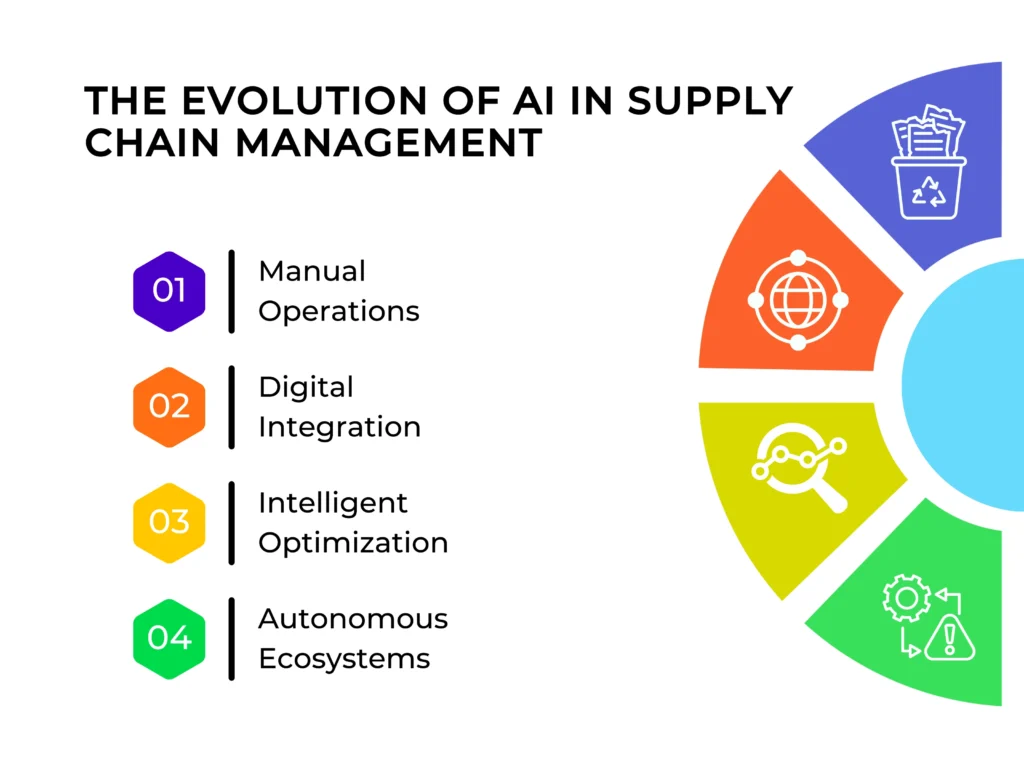
AI in supply chain refers to the integration of advanced technologies — including Machine Learning (ML), Predictive Analytics, Natural Language Processing (NLP), and Generative AI — to automate, optimize, and enhance every link of the supply chain.
At its core, AI translates complex datasets into predictive insights that help organizations improve visibility, reduce costs, and accelerate decision-making. Traditional models that relied on static reports and manual forecasting are now giving way to intelligent systems capable of adapting to real-time data.
Key benefits of Supply Chain AI include:
- Enhanced visibility across multi-tier networks
- Improved agility through predictive and prescriptive insights
- Cost efficiency via optimized inventory and logistics
- Proactive decision-making that anticipates disruption before it occurs
Key Use Cases of Supply Chain AI
Modern supply chains face constant change — shifting demand, market volatility, and rising customer expectations. To stay competitive, businesses are turning to Supply Chain AI to predict, optimize, and adapt faster than ever. By integrating AI in Supply Chain, organizations gain predictive insights, automate decisions, and enhance visibility across every stage of the value chain. Here are the key use cases driving this transformation:
- Predictive Demand Forecasting and Inventory Optimization: AI analyzes sales history, trends, and external factors to forecast demand accurately. It helps maintain the right inventory levels, reduce excess stock, and improve fulfillment speed — ensuring both cost efficiency and customer satisfaction.
- Supplier Risk Analysis and Adaptive Sourcing: AI evaluates supplier performance, financial stability, and external risks to detect potential disruptions early. With predictive sourcing insights, businesses can diversify suppliers and build stronger, more resilient networks.
- Route Optimization and Logistics Automation: AI-powered logistics models determine the fastest, most cost-efficient routes based on real-time data like traffic, fuel prices, and delivery schedules. The result: lower costs, fewer delays, and greater delivery precision.
- Quality Control through Anomaly Detection: AI monitors production and inspection data to spot irregularities instantly. Early detection helps prevent defects, reduce waste, and maintain consistent product quality.
AI Supply Chain Examples Driving Industry Transformation
As global commerce accelerates, businesses across sectors are turning to AI in supply chain operations to stay agile and efficient. The transformative effect of AI extends beyond automation — it enables smarter collaboration, contextual decision-making, and resilience under uncertainty. Each industry is discovering unique ways to harness data intelligence for growth, sustainability, and reliability.
AI in Food Supply Chain
In the food industry, precision and timing are everything. AI brings a new level of intelligence to sourcing, storage, and delivery — ensuring products move efficiently while maintaining quality.
By analyzing consumption trends, weather data, and distribution patterns, AI helps producers plan more accurately and reduce waste. Machine learning enhances traceability by mapping the complete journey of ingredients, which supports compliance and consumer trust. Predictive logistics algorithms further strengthen cold-chain reliability, adjusting transport conditions and routes in real time.
ConverSight enables food and beverage organizations to convert fragmented data into real-time insight — allowing operations teams to respond instantly to fluctuations in supply, demand, and regulatory requirements.
See how ConverSight gives your food supply chain the power to adapt in real time → Watch Now!
AI in Retail Supply Chain
Retail supply chains are defined by pace and personalization. With AI, retailers can synchronize thousands of moving parts — from supplier coordination to last-mile fulfillment — in a way that manual systems never could.
AI models study customer behavior and regional sales data to anticipate shifts in buying patterns, ensuring the right products reach shelves and online channels exactly when needed. Intelligent fulfillment engines balance warehouse capacity, inventory turnover, and delivery windows to optimize cost and experience simultaneously.
This data-driven orchestration allows retail enterprises to remain competitive while consistently meeting modern consumer expectations for speed, choice, and reliability.
AI in Manufacturing Supply Chain
In manufacturing, the competitive edge lies in operational foresight. AI enables factories to plan production dynamically — not by fixed schedules, but through continuous sensing of materials, capacity, and demand signals.
Machine-learning-based forecasting aligns procurement with real-time consumption, preventing both overstock and shortages. Vision-based quality inspection detects minute defects invisible to the human eye, improving accuracy without slowing throughput. And adaptive scheduling tools reprioritize tasks automatically when disruptions occur.
By turning production data into actionable intelligence, AI in supply chain empowers manufacturers to maintain consistency, cut costs, and innovate faster than ever before.
AI in Automotive Supply Chain
The automotive supply chain is one of the most globally distributed and data-intensive networks in existence. AI connects its many layers — from parts suppliers to dealerships — into an integrated, insight-driven ecosystem.
Predictive analytics align component procurement with market demand and production forecasts. Supplier-performance models track quality metrics and delivery reliability in real time. Logistics algorithms continuously optimize shipping routes to minimize delays and emissions.
Generative AI takes this further by modeling hypothetical scenarios — such as component shortages or policy changes — helping manufacturers prepare alternative sourcing or production plans before disruptions occur.
AI in Pharmaceutical Supply Chain
Precision, transparency, and compliance define the pharmaceutical supply chain. AI strengthens these pillars through intelligent monitoring and end-to-end visibility.
Predictive demand planning ensures drug availability in line with prescription trends and regional health data. Automated quality-control systems validate every batch, flagging inconsistencies immediately. Meanwhile, AI-driven tracking maintains visibility of temperature-sensitive products across global distribution routes, ensuring safety and adherence to regulations.
For pharmaceutical enterprises, the integration of AI in supply chain operations translates into a measurable advantage — fewer shortages, faster distribution, and unwavering quality assurance.
AI in Supply Chain Planning for Data-Driven Decision Making
In an era of constant disruption, supply chain planning has evolved from static forecasting to intelligent, adaptive decision-making. AI in supply chain planning empowers businesses to predict demand shifts, optimize inventory, and balance production and distribution — all in real time.
AI transforms planning into a proactive, insight-driven process where data informs every move. By combining predictive analytics, automation, and real-time visibility, organizations can respond instantly to market changes instead of reacting after impact.
Key Advantages of AI-Driven Planning:
- Dynamic Forecasting: AI models continuously learn from market trends, seasonality, and external variables to refine forecasts and reduce uncertainty.
- Inventory Precision: Smart algorithms maintain optimal stock levels by aligning supply with demand fluctuations.
- Scenario Simulation: AI enables planners to test multiple “what-if” scenarios — evaluating risks, costs, and service impacts before decisions are made.
- Integrated Decision-Making: Connected AI systems unify data from ERP, logistics, and procurement platforms for seamless planning execution.
- Resilience and Agility: Automated re-planning allows organizations to pivot quickly in response to disruptions or demand volatility.
As businesses face mounting pressure to stay agile and efficient, AI in supply chain planning has become essential for driving growth, stability, and strategic advantage.
Supply Chain AI Solutions
In a world where markets change overnight, competitiveness depends on having a smart, connected supply chain. Supply Chain AI Solutions bring intelligence, automation, and foresight together to help businesses make faster, data-driven decisions.
Unlike traditional systems that only report past events, AI solutions predict what’s coming next — and why. They integrate with ERP, procurement, and logistics platforms to create a single, intelligent ecosystem that delivers:
- Operational Foresight: Detect early warning signals of disruption before they escalate — from supplier delays to demand fluctuations.
- Dynamic Coordination: Align production, inventory, and logistics automatically, ensuring supply meets demand with minimal human intervention.
- Decision Empowerment: Provide every stakeholder — from planners to executives — the ability to act on insights instantly through intuitive, conversational interfaces.
AI Supply Chain Software
Behind every intelligent supply network lies robust AI Supply Chain Software — the digital core that connects data with decisions. Far from being another layer of enterprise IT, this software is designed to think, adapt, and evolve alongside business needs.
Advanced AI supply chain software delivers:
- Predictive Control: Anticipates demand, supplier performance, and logistics variables before issues arise.
- Prescriptive Insights: Recommends optimal responses — from adjusting inventory levels to rerouting shipments — with precision and speed.
- Conversational Accessibility: Empowers users to query data in natural language and receive immediate, contextual insights without depending on analysts or reports.
- Collaborative Intelligence: Breaks silos by linking finance, operations, and procurement teams through a single intelligent layer.
What sets next-generation AI Supply Chain Software apart is its ability to learn continuously — every transaction, shipment, and exception refines its accuracy. Businesses gain not only efficiency but also a decision-intelligent infrastructure that scales globally without losing control or context.
Generative AI Driving the Next Wave of Supply Chain Innovation
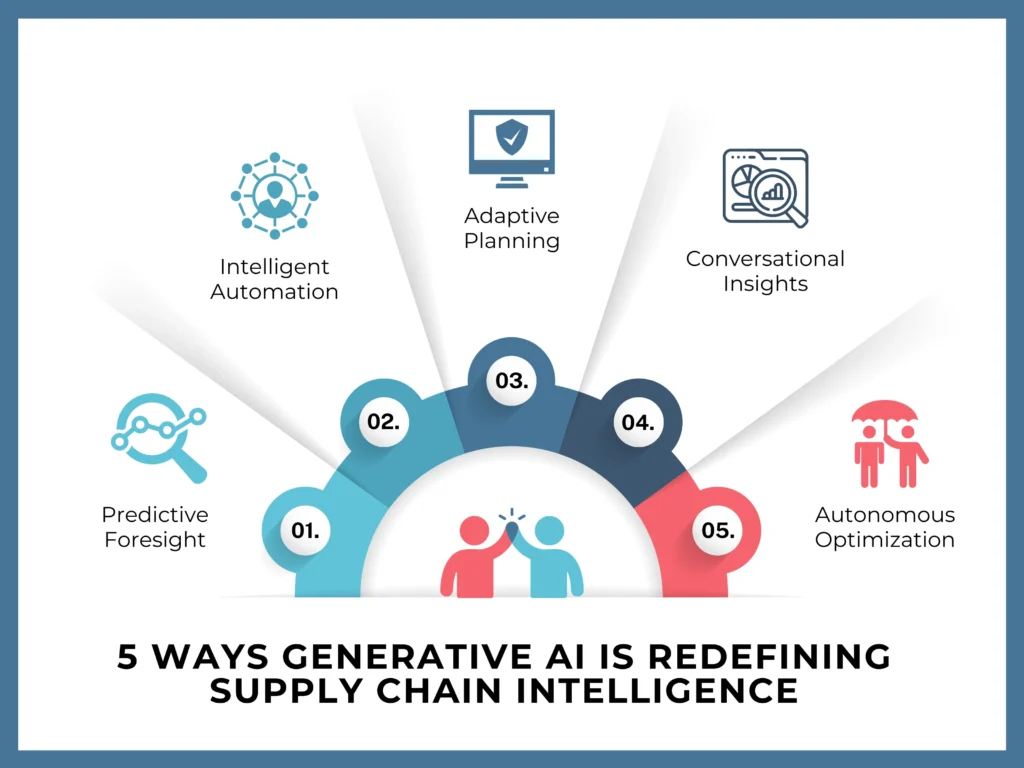
Generative AI is not just another advancement in AI in Supply Chain — it represents a fundamental shift from predictive analytics to creative intelligence. Where traditional AI interprets existing data to identify trends, Generative AI synthesizes new insights, models, and strategies that were previously unimaginable. It empowers supply chain leaders to envision multiple futures, prepare for uncertainty, and design adaptive pathways before disruption strikes.
Supply chains must evolve into intelligent ecosystems capable of thinking, adapting, and responding dynamically. Generative AI is the catalyst behind this transformation — merging creativity with computation to help businesses unlock strategic foresight.
The Strategic Edge of Generative AI in Supply Chain
- From Forecasting to Foresight: Instead of merely predicting demand, Generative AI constructs dynamic “what-if” scenarios that account for shifting markets, seasonal behavior, and external shocks. This enables decision-makers to evaluate the impact of every possible move before acting.
- Personalized Recommendations and Alerts: By understanding operational patterns, Generative AI provides real-time, personalized alerts and recommendations tailored to each role — from procurement to logistics. It suggests optimal actions, highlights potential disruptions, and guides teams toward the most efficient solutions before problems escalate.
- Accelerating Decision Velocity: With the ability to simulate millions of potential outcomes in minutes, Generative AI provides executives with instant, evidence-based recommendations that improve both strategic and operational agility.
- Enhancing Collaboration and Human Creativity: Generative AI acts as an augmentation layer for supply chain teams — converting complex data into narratives, visualizations, and actionable strategies that humans can interpret and refine. It turns analysis into co-creation.
- Building Resilient and Sustainable Supply Chains: By modeling alternative sourcing options, logistics routes, and production schedules, Generative AI helps organizations design supply chains that are not only efficient but also sustainable and disruption ready.
The ConverSight Approach to AI in Supply Chain
ConverSight’s Generative AI platform is purpose-built to move enterprises beyond static analytics into a world of contextual, conversational, and continuous intelligence. Designed to unify data and decisions, it empowers teams to understand what’s happening in the supply chain, why it’s happening, and how to act on it — instantly.
Key Capabilities of ConverSight’s Generative AI Platform:
- Instant Business Insights and Storytelling: The platform converts raw data into clear, narrative-driven insights in real time. Instead of dashboards or static charts, users receive story-based explanations that reveal business performance, root causes, and forward actions — transforming analytics into guided decision narratives.
- Built-In Semantic Graph for Deep Understanding: ConverSight’s proprietary semantic layer (Synapsnet) connects data relationships across systems, products, and events. This semantic knowledge graph understands business context, enabling AI to deliver relevant, accurate, and purpose-driven insights rather than surface-level answers.
- Bring Your Own LLM (Large Language Model): The platform supports flexible integration with the enterprise’s preferred LLMs, allowing organizations to maintain control, privacy, and scalability. Whether it’s OpenAI, Anthropic, or an internal model, ConverSight enables a secure, customizable generative-AI experience aligned with company policies.
- Built-In Vector Database and Memory: ConverSight includes a native vector database and long-term conversational memory, enabling the system to retain context from previous interactions. This ensures continuity, faster recall, and smarter recommendations that evolve with each conversation or query.
- Contextual Intelligence for Smarter Decisions: Beyond query-based responses, the platform understands intent, tone, and context. It aligns insights with the user’s role and objective — whether it’s a supply-chain planner optimizing demand, a logistics head managing disruptions, or an executive tracking performance KPI.
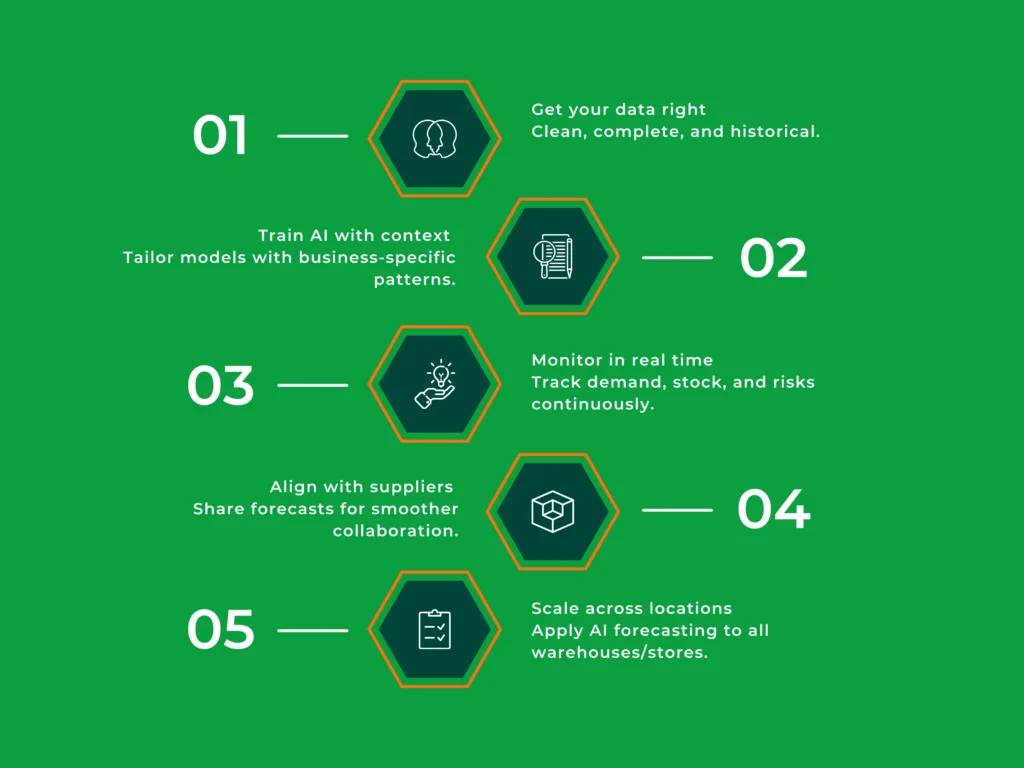
See how ConverSight brings AI to every layer of your supply chain → Learn More!
Conclusion – Building the Intelligent Supply Chain of the Future
The future of supply chains lies in intelligence, adaptability, and speed. AI in Supply Chain empowers businesses to predict change, act instantly, and optimize continuously — transforming uncertainty into opportunity. As global operations grow more complex, Supply Chain AI is becoming the cornerstone of resilience and growth. ConverSight enables this evolution by delivering real-time visibility, predictive insights, and intelligent automation — helping enterprises build smarter, stronger, and future-ready supply chains.
ConverSight — One platform for all your Supply Chain AI solutions → Request a Demo